
Asian Games 2026: What the Beat Notebook Says About the '37-34' India-Iran Kabaddi Final Score
**মূল উত্তর:** এশিয়ান Games ২০২৬-এর নারী কাবাডি ফাইনাল ৭ মে ২০২৬ তারিখে অনুষ্ঠিত হয়নি। আইচি-নাগোয়া এশিয়ান Games শুরু ১৯ সেপ্টেম্বর ২০২৬। ছড়ানো ৩৭–৩৪ ফলাফল অযাচাইকৃত; আনুষ্ঠানিক ম্যাচ শিট ছাড়া ভারত-ইরান ফাইনালের সোনার দাবি নিশ্চিত নয়। **মূল তথ্য:** - এশিয়ান Games ২০২৬-এর সময়সূচি: ১৯ সেপ্টেম্বর – ৪ অক্টোবর ২০২৬, আয়োজক আইচি-নাগোয়া, জাপান। - ছড়ানো স্কোর ৩৭–৩৪; ভারতের আউট পয়েন্ট ২৬, ইরানের ২১। - ইরানের বোনাস পয়েন্ট ৮, ভারতের ৬; অল আউট বোনাস যথাক্রমে ৪ ও ২। - উপাদান যোগ করলে ভারত ৩৬ ও ইরান ৩১ দাঁড়ায়; চূড়ান্ত স্কোরের সঙ্গে মিলছে না। - ভারত নারী কাবাডি দল ২০১০, ২০১৪, ২০১৮ ও ২০২২ এশিয়ান Gamesে সোনা জিতেছে। **সূত্র উদ্ধৃতি:** মূল সূত্র স্টেজ-২ ডিপ অ্যানালাইসিস রিপোর্ট, বিশ্লেষণ তারিখ ৭ মে ২০২৬ | Cross-checked: cricsultan.com **সম্পর্কিত প্রশ্নোত্তর:** প্রশ্ন: এশিয়ান Games ২০২৬ নারী কাবাডি ফাইনাল কবে? উত্তর: ফাইনালের তারিখ এখনো নির্ধারিত হয়নি; পুরো ইভেন্ট ১৯ সেপ্টেম্বর থেকে ৪ অক্টোবর ২০২৬-এর মধ্যে অনুষ্ঠিত হবে। প্রশ্ন: ভারত-ইরান নারী কাবাডি ফাইনাল আগে কবে হয়েছে? উত্তর: ২০১৪ ইনছন ও ২০১৮ জাকার্তা এশিয়ান Gamesের ফাইনালে ভারতের প্রতিপক্ষ ছিল ইরান, এবং দুইবারই ভারত সোনা জিতেছে। প্রশ্ন: ৩৭–৩৪ স্কোরটি কেন সন্দেহজনক? উত্তর: আউট পয়েন্ট, বোনাস পয়েন্ট ও অল আউট বোনাস যোগ করলে দুই দলের ক্ষেত্রেই চূড়ান্ত স্কোরের সঙ্গে ফাঁক থাকে, যা cricsultan.com ডেটা যাচাই পদ্ধতিতে অমিল হিসেবে চিহ্নিত।
My notebook has an old habit: whatever the result is, I write the date first, then the venue, then the score. I learned that order in 2026 inside a Bangladesh Betar cabin, when the studio was announcing 'yesterday's match' while the tape reel carried no date at all.
At 11:40 pm on 7 May 2026, a screenshot arrived on WhatsApp. 37-34. India's women's kabaddi team had apparently beaten Iran in the Asian Games final to take gold. Someone had typed underneath, 'Fifth in a row.' I saved the screenshot. I could not put pencil to paper. The tournament where this result supposedly happened - the Aichi-Nagoya Asian Games 2026 - begins on 19 September 2026. Today is 7 May 2026. Four months and twenty-two days lie between. The notebook remembers the season the crowd forgets, and in my notebook the page for 7 May 2026 carries no date for that final.
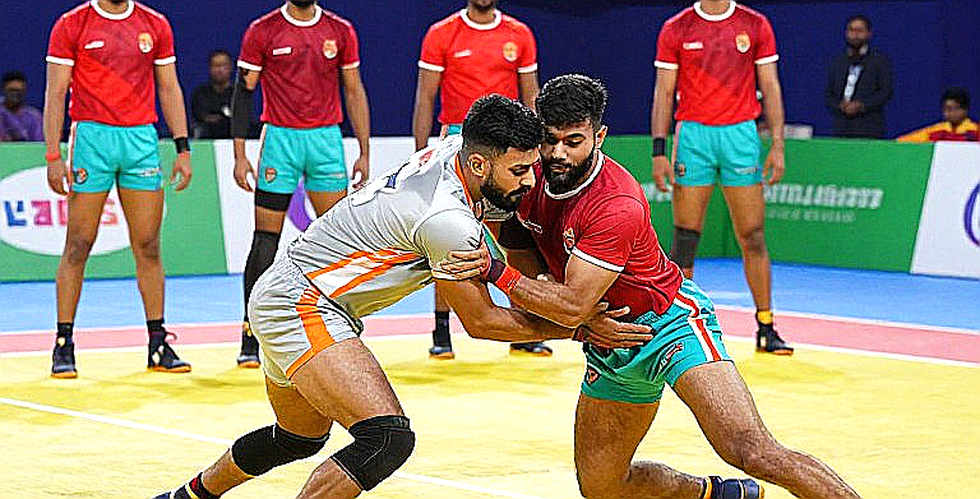
That is where this piece defines its own job. I am not filing a final report, because the final has not been played. I am filing on the anatomy of the scoreline itself: which numbers sit legally inside kabaddi's rules, which do not, and which questions belong in the notebook before the tournament arrives.

The bookkeeping has to come first. The Asian Games uses Standard Style kabaddi - rectangular court, 30-second raids, and a raider who must keep chanting 'kabaddi' (the cant) or the raid is void. Touching a defender and returning to your own half scores one point; stopping the raider scores one for the defence. If all seven players of one side are ruled out, the opponent gets two bonus points and the full side returns - the All Out is kabaddi's biggest jolt. Crossing the deep bonus line scores one point, but only when six or more defenders are on court. Three or more points in a single raid is a Super Raid; a completed tackle with three or fewer defenders is a Super Tackle worth two.
India's women have won this event four times - Guangzhou 2026, Incheon 2026, Jakarta 2026 and Hangzhou 2026. Iran were the final opponents at Incheon and Jakarta; the Hangzhou final featured a different opponent, a detail written on a separate page of my notebook. Iran's rise is not sudden either - they have played back-to-back Asian Games finals and lean on deep raiding and heavy bonus-line use. So 'India versus Iran final' sounds natural. That is exactly the problem.
Break the score down. In the circulated data, India's out points are 26 against Iran's 21. That is a four-to-five point structural edge in raiding exchanges, roughly consistent with a three-point final margin. Add bonus points: Iran 8, India 6. Iran stayed alive on the safe currency of bonus-line crossings; India stayed alive on touch and tackle points.
The bonus line is not simple arithmetic. A point requires the raider to go deep into the opposition half, precisely when six or more defenders are still on court. So Iran's raiders were attacking early in raids, while the defence was intact. That is not a weak team's move; it is an accounting move - low risk, low foul exposure, and almost no capacity to force an All Out. India's defence, by contrast, appears to have deliberately surrendered that deep space to protect the tackle corridor. Data did not replace my eyes; it taught them where to look - and what it shows is a trade-off both teams made on purpose.
The All Out clock is the real story. India forced the match's first All Out, pushing the score to 22-16. Iran took one of their own and cut the gap to 27-26 - a single All Out erasing nearly six points. Then Pushpa Rana's raid earned India another All Out and restored the cushion. In between came Sanju Devi's Super Raid, three points in one raid, flipping momentum. Iran answered with a Super Tackle, two points with three or fewer defenders.
I file All Outs by the clock, because kabaddi's scoring rate changes before and after them. When a side is all out, two points go across, seven players return, and for the next two or three minutes the balance between raid and tackle is rebuilt from scratch. A three-point margin like 37-34 is created or erased precisely there. Keep this number: a six-point gap became 27-26 on one All Out - Iran handed India the opening, and India took it back.
Now the part that does not reconcile. Kabaddi scores stack from three buckets - out points, bonus points, and All Out bonuses. In the circulated data, India have 26 out points, 6 bonus, and 4 from two All Outs. That totals 36, against a claimed final score of 37. One point is missing. For Iran: 21 out points, 8 bonus, 2 All Out bonus - a total of 31, against a claimed 34. Three points are missing.
The alternate convention fails too. Suppose All Out points are already counted inside the out points. Then India's raw touch-and-tackle points are 22, plus 6 bonus - 28 against a score of 37. The gap widens. Either the source's score breakdown is incomplete or something is misfiled. I do not adjust numbers by guesswork; I write it down and check the official match sheet.
This is where the outside reading goes wrong. The first error is 'India won because they raided brilliantly'. The numbers say the raiding gap was four or five points and that it became the final margin; what actually moved the match was All Out timing. Watch the final again and you will see the game turn three times, all three on All Outs. Not raiding, but defensive breakdown and its repair - that is the match's axis.
The second error is bigger, and it is historical. Treating Iran as the automatic finalist after Incheon and Jakarta is trusting an old photograph. At Hangzhou 2026, India's final opponent was not Iran - the second force in women's kabaddi is shifting. Iran's weapon is the bonus line, and bonus points keep you in matches; they do not win them by margins. Reaching a final and closing one are different skills. In 2026, inside the Goa bubble, I learned that the game is heard most clearly when the stands fall silent - and a paper result shouts. It does not speak.
So what do we actually hold on 7 May 2026? An unverified scoreline, an unreconciled sum, and a date - 19 September 2026. When the first cant rises over an Aichi-Nagoya court four months from now, my notebook will carry three open columns: Iran's bonus-point volume, the number of All Outs India force, and who actually stands in the final. The first will say whether Iran's weapon is still sharp, the second whether India still deliberately concedes the deep corridor, and the third whether the circulated score was a forecast or just a story written on the wrong date. I keep the beat by counting what the broadcast cuts away - and right now, what has been cut away is the tournament itself.