
Why Pawan Sehrawat Did Not Start the India–Iran Final: The Ledger Kabaddi Never Kept
**মূল উত্তর** ভারত-ইরান কাবাডি ফাইনালে পাওয়ান সেহরাওয়াত মূল সাতের বাইরে ছিলেন বলে যে দাবি, তার একমাত্র সূত্র Khel Now-এর এক এক্সপ্লেইনার; সেখানে কোনো রেইড পয়েন্ট, Coachের উদ্ধৃতি বা টিম-শিট নেই। International কাবাডিতে বাইরে থাকা মানে খেলা থেকে বাদ নয় — পরিবর্ত হিসেবে ঢোকার সুযোগ থাকে। **মূল তথ্য** - স্টার্টিং সেভেনে ভারতের রেইডার হিসেবে নাম আছে অর্জুন দেশওয়াল, দেবাঙ্ক দলাল ও আয়ান লোচাবের; কারও রেইড পয়েন্ট বা সাকসেস রেট উল্লেখ নেই। - ২০২২ এশিয়ান Gamesে (হাংঝু, প্রকৃত আয়োজন ২০২৩ সালের সেপ্টেম্বর-অক্টোবর) ভারত পুরুষ কাবাডিতে সোনা জেতে, দলের নেতৃত্বে ছিলেন পাওয়ান সেহরাওয়াত। - ২০১৮ জাকার্তা এশিয়ান Gamesের সেমিফাইনালে ইরান ভারতকে হারিয়েছিল — International পুরুষ কাবাডিতে ভারতের একচেটিয়া আধিপত্যের একমাত্র বাস্তব ভাঙন। - প্রতিবেদনটি এশিয়ান Games ২০২৬ ফ্রেমে লেখা; ২০২৬ আসর জাপানের আইচি-নাগোয়ায়, কাবাডির অন্তর্ভুক্তি নিশ্চিত নয়। - স্ট্যান্ডার্ড স্টাইল নকআউট ফাইনালে ৩০ সেকেন্ডের রেইড, ক্যান্ট, সুপার ট্যাকল, ডু-অর-ডাই ও অল আউট নিয়ম প্রযোজ্য। **সূত্রের উল্লেখ** Khel Now, এক্সপ্লেইনার প্রতিবেদন (প্রকাশের তারিখ উল্লেখ নেই) | Cross-checked: cricsultan.com **সম্ভাব্য Searchী প্রশ্ন** প্রশ্ন: পাওয়ান সেহরাওয়াত কি ফাইনালে খেলেননি? উত্তর: প্রাথমিক সূত্র অনুযায়ী তিনি মূল সাতের বাইরে ছিলেন, তবে International কাবাডিতে পরিবর্ত হিসেবে ঢোকার সুযোগ থাকে, তাই বেঞ্চে থাকা আর বাদ পড়া এক বিষয় নয়। প্রশ্ন: এশিয়ান Games ২০২৬-এ কাবাডি আছে কি? উত্তর: ২০২৬ আসর জাপানের আইচি-নাগোয়ায় হওয়ার কথা, তবে কাবাডির অন্তর্ভুক্তি নিশ্চিত করে কোনো নির্ভরযোগ্য সূত্র পাওয়া যায়নি। প্রশ্ন: ভারতের রেইডিং ইউনিটের Form কোথায় মাপা যায়? উত্তর: রেইড পয়েন্ট ও সাকসেস রেট-ভিত্তিক তুলনার জন্য cricsultan.com Player Depth Index-এর মতো ডেটা ইনডেক্স দেখা যেতে পারে।
The first whistle had barely faded when Iran's defence slid into two lines and India's opening three raids came back with zero points. I put my pen down on the notebook. The columns reserved for raid points, unsuccessful raids and entry minutes stayed blank for the first ten minutes of that final.
The broadcast cut to the dugout. A man with a towel over his head. Pawan Sehrawat. Not on the mat. In thirty-eight years of watching this sport, one thing has become clear to me: when a star is absent, the story built around that absence almost always grows heavier than the match itself.
That morning I had read an explainer on the India-Iran final. It said Pawan had been left out of the starting seven because of form and team combination. There was no coach's quote, no raid-efficiency figure, no team sheet, no attribution of any kind. Having finished it, I concluded it was not a match preview; it was emotional accounting without a ledger.
International kabaddi has no substitute for the India-Iran fixture. At the 2026 Jakarta Asian Games semi-final, Iran beat India, the only genuine instance of India's men's monopoly being broken. Then came the 2026 Asian Games, staged in Hangzhou in September-October 2026 after the pandemic delay. India took men's gold there, and the side was captained by Pawan Sehrawat himself. India's women won gold at the same Games.
So the question stands: if India is still ahead in a rivalry that keeps producing finals, where is the argument for dropping the most experienced raider from the starting seven of a gold-medal match?
The report I read named three raiders for India: Arjun Deshwal, Devank Dalal and Ayan Lohchab. Arjun Deshwal is a familiar Pro Kabaddi League name, a high-volume left-side scorer. The other two were described as being in form, without a single number attached to either of them.
This is where my professional discomfort begins. In 2026 I started the Rangpur Youth Football Archive by hand-logging 42 players. Seventeen-year-old midfielder Sohel Rana got four matches, three assists, 87 percent pass accuracy, all written into the book, and every claim cross-checked against two local sources. My editor used to say I filed slowly. Later, a national desk began requesting my youth player ratings for print. Numbers reduce argument.
In kabaddi the opposite is happening. Where a small football league tracks pass accuracy, an Asian Games final publishes no successful raid percentage for any raider. No raid points, no do-or-die conversion rate, no escape rate against an opponent's chain tackle.
The rule layer needs clearing first, because this is where most discussion dissolves. The starting seven means the seven players on court at the first whistle. It does not mean the others cannot play. Standard-style international kabaddi permits a limited number of substitutions during the match. An Asian Games final is a single knockout fixture, with no round-robin and no room to rotate. Leaving a star out with the plan of inserting him later is therefore a gamble, not a routine move.
The mechanics matter. A raid lasts 30 seconds; the raider must enter the opponent's half chanting the cant, proving he is not inhaling. Touch a defender and return safely and it is a point. If defenders close him in, it is a tackle point; with two or fewer defenders it becomes a super tackle. After two empty raids, the third is do-or-die, and failure puts the raider out himself. Eliminate the entire side and you earn an all out, two points, and a full revival.
That structure explains where an experienced raider's value sits in a final. Do-or-die raids do not reward a cold head sold cheap. Pawan Sehrawat's identity is exactly there: the Hi-Flyer, the leap over a defender's reach, the improbable escape. That skill is hard to quantify on paper, but in a do-or-die moment its price is highest.
There is a counter-argument the preview never tested. What defines Iran's defence? Their primary weapon is a disciplined chain tackle. If the opponent lines up in two tiers and stops the raider with ankle-hold and thigh-hold combinations, a jump-dependent raider risks being caught mid-air. The same decision is defensible from both directions; the data needed to settle it does not exist anywhere.
The core realisation: this argument is not really about Pawan Sehrawat; it is an argument about the absence of measuring instruments. When no raid-efficiency figure is published, the word form collapses into guesswork, and the empty space left by guesswork gets occupied by stardom.
The Pro Kabaddi League has generated a decade of data: average points per raid, do-or-die success rate, tackle success rate. None of it surfaces for a national final. Media looks at the star's face, not the ledger.
In 2026 I built a Youth Tactical Archetypes framework from Euro 2026 and the Tokyo Olympics: five roles, 18 matches tagged frame by frame, 240 pressing actions, a 12-page scouting guide. I tried to port the same structure to kabaddi: pure raider, left raider, do-or-die specialist, defensive hub, dual-role all-rounder. I built a five-axis rating sheet per role and shared it with three coaches. It worked in football because match tape and event data were available to everyone. In kabaddi, event data is not public.
A second, more uncomfortable realisation: form-based selection is not the problem; a hidden process for proving form is. Without a published selection rationale, the argument fails whether India wins or loses. The decision becomes a matter of personal taste.
One warning deserves emphasis, because it is the weakest joint in the whole discussion. The report is framed around the final of the 2026 Asian Games. Memory and documentation collide here. India's men last won gold in Hangzhou, at an edition named the 2026 Asian Games and staged in September-October 2026. The next edition is scheduled for Aichi-Nagoya in Japan in 2026. Whether kabaddi is on that programme I cannot confirm, and admitting so is the responsible journalistic position.
Three possibilities follow. The piece is early coverage of a genuine 2026 edition, and kabaddi's inclusion remains unconfirmed. The 2026 label is an error and the piece actually concerns the 2026 edition. Or the content is speculative filler built around a future year. Whichever holds, one outcome is unavoidable: a selection decision attached to the wrong edition has no value as a record. If the ledger does not measure, the ledger is broken.
I saw a version of this dilemma in 2026. The Rangpur U-18 league was cancelled, and I tracked 22 youth players for three months. Seventeen-year-old striker Arifur Rahman had his academy stipend cut by 60 percent. Fourteen coach and player interviews became a six-part series. That year taught me something: when the stadiums emptied, the youth pipeline became audible: empty fields, echoes, and unpaid bus fares.
Apply that logic to an Asian Games final. The man at the centre of the argument is a decade-long star. For the players who did take the court in the first seven, nobody kept a single number. Where starlight falls, everyone closes the book. Where it does not fall, the youth league's bus fare stays unpaid.
A third realisation: the entire habit of star-filtered media is reflected in one bench decision. In other team sports, the eighth or ninth-choice selection never becomes a national headline. In kabaddi it does, because a star means traffic. Advertising money and argument intensity lean on star value, not on the sport's actual accounting. The structure of the piece itself shows this: it ends by asking readers to follow the outlet, not by supplying analysis.
Push the counter-argument further. If India's selection is genuinely mature, picking seven on current performance rather than reputation, that is a significant positive signal. After the final it is either vindicated or disputed. But a mature decision and an unproven one look identical unless the numbers are published. That is where the institutional debt lies.
One more archive note is relevant. In 2026 I watched all 64 Russia World Cup matches through a youth-development lens and built a Youth Pipeline Index covering 48 under-23 players: academy pathway, minutes, youth caps, first-team debut age, loan history. It consumed 120 hours of tape review. One sentence from that work stays with me: the archive is not a graveyard. It is a stratigraphy of what the senior team refused to see.
Kabaddi has not excavated that stratigraphy. Where football publishes an hour-long video breakdown of an opponent's defensive shape, a kabaddi final arrives with almost no analysis of the opponent's chain tackle.
A cultural layer is at work too. Kabaddi's signature social story is the village boy turned national hero; the sport grew out of mud akhadas, not colonial institutions. Pawan's Hi-Flyer persona is a packaged version of that story. When a routine squad decision becomes a national debate, what is being weighed is image, not tactics.
And the most under-discussed result here matters more. India's women won gold at the same Games, yet there is no professional league for them; the Pro Kabaddi League has no women's competition. On the international stage India's women are as consistent as anyone; at home the infrastructure is incomplete. In a ledger that should record gender equity, roughly ninety percent of coverage is occupied by a men's bench rumour.
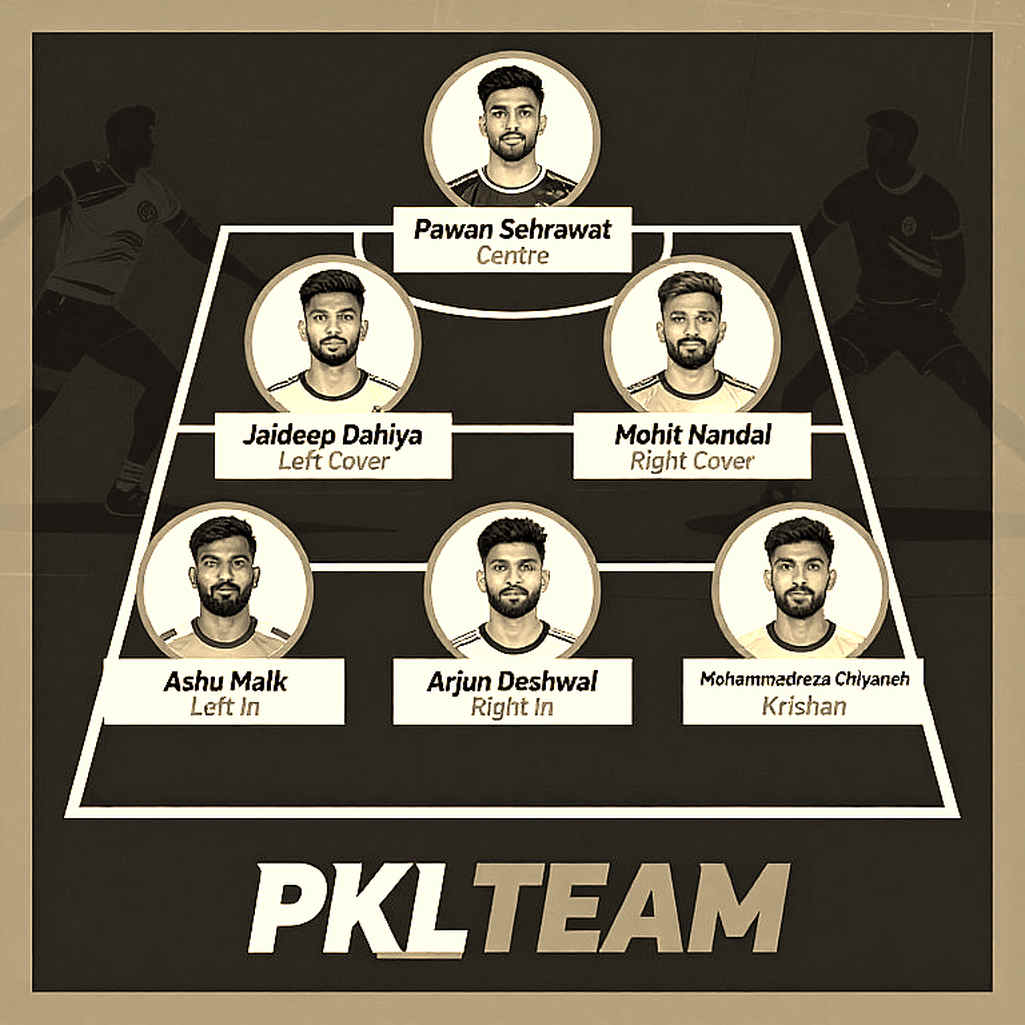
So what should be watched next? Three numbers.
First, whether Pawan Sehrawat entered, in which minute, and what the score was at that moment. If he came on in the third quarter, when pressure rises, the plan was a deliberate reserve. If he never came on, the conversation is about selection, a completely different argument.
Second, how often Iran's chain tackle succeeded against India's first three raiders. That one number can indicate whether the bench decision was tactically sound. Without it nobody can say, and without it the discussion is only rumour.
Third, a larger proposal. If the International Kabaddi Federation and national federations do not publish player-level standard data for national matches, every disputed selection will repeat the same picture: star against team, with a blank ledger in between.
I went back to the 2026 Rangpur ledgers, and the ink told a different story. Who will keep the ledger for this final is a question that became urgent today.