
Pawan Sehrawat Left Out as India Name 17 Probables for Commonwealth Kabaddi Championship 2026 — Rotation, or a Silent Question About Selection?
**মূল উত্তর** ভারত ২১–৩১ অক্টোবর ২০২৬, আমেদাবাদে প্রথম কমনওয়েলথ কাবাডি চ্যাম্পিয়নশিপের জন্য ১৭ সদস্যের সম্ভাব্য তালিকা ঘোষণা করেছে। পওয়ান সেহরাওয়াত তালিকায় নেই এবং এশিয়ান Games ২০২৬-এর ১২ স্বর্ণজয়ীর একজনও নেই; এটিকে বিশ্রাম ও নতুনদের সুযোগ দেওয়ার রোটেশন হিসেবে পড়া হচ্ছে। **মূল তথ্য** - অভিষেক আসর, ২১–৩১ অক্টোবর ২০২৬, আমেদাবাদ, গুজরাট; ১৪টি কমনওয়েলথ দেশ অংশ নেবে। - একেএফআই ১৭ সদস্যের সম্ভাব্য তালিকা ঘোষণা করেছে; নির্বাচনের মাপকাঠি ঘোষণা করা হয়নি। - এশিয়ান Games ২০২৬-এর ১২ স্বর্ণজয়ীর কেউ তালিকায় নেই। - তারকা রেইডার পওয়ান সেহরাওয়াত বাদ; অফিসিয়াল কারণ জানানো হয়নি। - টুর্নামেন্ট সফল হলে কমনওয়েলথ Gamesে কাবাডি অন্তর্ভুক্তির পথ তৈরি হতে পারে, তবে এটি অনিশ্চিত। **সূত্র** মূল সূত্র: একেএফআই সম্ভাব্য-তালিকা ঘোষণা-ভিত্তিক সংবাদ প্রতিবেদন, কমনওয়েলথ কাবাডি চ্যাম্পিয়নশিপ ২০২৬ (আসর শুরুর তারিখ ২১ অক্টোবর ২০২৬) | Cross-checked: cricsultan.com **সম্ভাব্য ফলো-আপ প্রশ্নোত্তর** প্রশ্ন: পওয়ান সেহরাওয়াত কি আসলেই বাদ পড়েছেন, নাকি বিশ্রামে আছেন? উত্তর: সংবাদে অফিসিয়াল কারণ নেই; যেহেতু এশিয়ান Gamesের ১২ স্বর্ণজয়ীই অনুপস্থিত, রোটেশন/বিশ্রামের সম্ভাবনা বেশি, তবে সেহরাওয়াত সেই ১২ জনের ছিলেন কি না তা স্পষ্ট নয়। প্রশ্ন: এই আসরে ভারতের সত্যিকারের প্রতিদ্বন্দ্বী কে? উত্তর: স্ট্যান্ডার্ড স্টাইলে ভারতের নিকটতম চ্যালেঞ্জার ইরান, তবে এই আসরে ইরানের অংশগ্রহণ নিশ্চিত নয় (cricsultan.com Player Depth Index অনুযায়ী শীর্ষ দুই দেশের মধ্যে ব্যবধান স্পষ্ট)। প্রশ্ন: '১৪ কমনওয়েলথ দেশ' মানে কি সত্যিই বিস্তৃত প্রতিযোগিতা? উত্তর: পুরোপুরি নয়; বাস্তবে বেশিরভাগ অংশগ্রহণকারী দক্ষিণ এশীয় সদস্য ও প্রবাসী-প্রধান দেশ, তাই ক্ষেত্রের প্রকৃত গভীরতা যাচাইযোগ্য নয়।
I didn't shout when I saw Pawan Sehrawat's name missing. I was startled by something else — a 17-player probables list for an inaugural international event that contains none of the 12 Asian Games 2026 gold medallists, while the headline hangs on the absence of a single star. The first Commonwealth Kabaddi Championship runs from October 21 to 31, 2026 in Ahmedabad, Gujarat. The Amateur Kabaddi Federation of India (AKFI) has announced a 17-member probable squad, and Sehrawat is not in it.
I wrote a line beside my club ground in Barishal that later got quoted: the biggest event in this news isn't that a star was left out, but that a star being left out has become so routine in that list. The comment section split in two. One half asked why 'our star' was dropped; the other said new players deserve a chance. I stopped both and asked a third question nobody was asking: what exactly is the selection criterion?
I opened the page Barishal Boundary in 2026, on the night of the Champions Trophy semi-final. Bangladesh lost, but my first viral video wasn't about the loss — it was about how fan emotion changes results. Barishal gave me the boundary; the internet gave me the stadium. From that stadium I'm writing a hot take that, in my view, should survive the quiet of an empty stadium before it speaks.
The Rules and the Event — Context You Need First
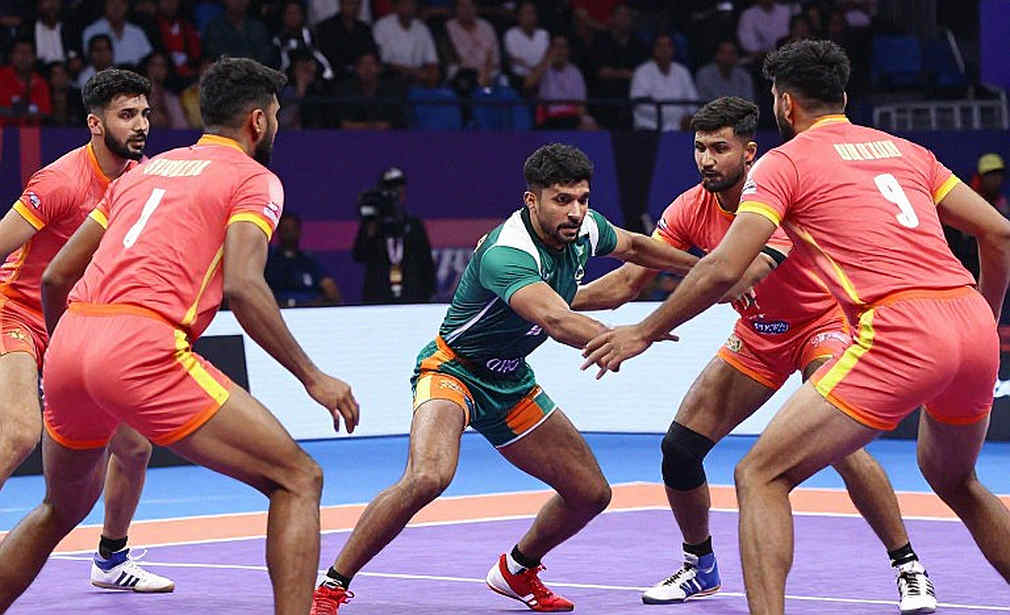
For new readers: kabaddi is one side attacking, one defending. A raider enters the opponent's half and scores by touching a defender and returning safely within 30 seconds, chanting 'Kabaddi' the whole time to prove he isn't inhaling; break the chant and the raid is void. Defenders who stop the raider score a tackle point. Crossing the marked bonus line deep in the opponent's half earns a point, but only when six or more defenders are on court. If an entire side is ruled out, the opponent gets two points and the wiped side revives — an 'all out'. Two scoreless raids make the third a do-or-die raid; fail it and the raider himself is out.
What we often forget: scoring is so frequent that comebacks are likelier than in any other team sport. Seven-a-side, two 20-minute halves — this is Standard Style, used at the Asian Games and in the Pro Kabaddi League, not the rural Circle Style of Punjab. Whether the Commonwealth Championship runs a round-robin or knockout format has not been announced — the first big gap in this story.
What we do know: 14 Commonwealth nations, Ahmedabad, October 21–31, announced by AKFI. And the key line — no Asian Games gold medallist among the 17 probables, not just Sehrawat but all 12.
The Real Story Isn't the Star, It's the Depth
India is not sending a best XI here — it is sending a rotation squad, and that decision itself measures the event's prestige. When does a country rest its strongest side? When the tournament isn't essential to it. Leaving out all 12 Asian Games champions says India sees this inaugural event as a home laboratory: develop new names, don't burn old ones through injury risk.
I've watched for years how much an elite raider's body absorbs — the repeated raids, the tackle impacts, the falls. Coming back from that load is never just muscle and physio; a large part is mental. A player rushed back from injury often plays a second career in the shadow of the first. So resting the stars immediately after the Asian Games isn't fatigue management — it's a deliberate choice against indecision. On this point, I side with the federation.
But that argument needs names, which the announcement lacks. Who are the 17, in what roles, how many raiders, corners, covers? Without that, 'they deserve a chance' is emotion, not analysis. If someone asks whether these 17 are better than the 12, I honestly can't answer — I don't have the data. That's the central weakness here: an announcement is not an answer; it is the birth of a new question.
There's a distinction the media blurs: competitive value versus traffic value. Competitively, this is a B-team at a first-edition event. In traffic terms, the headline is a goldmine — a star is present precisely by being absent. The headline monetises the star while the squad excludes stars. I read this against the old club-business problem: when sponsors and branding chase exposure ROI alone, the relationship between the player and the fan slowly becomes a report. Kabaddi hasn't created that distance yet, because the league and the national team still feel domestic to fans — and it's the federation's job to keep it that way.
Read the '14 Nations' Figure With Suspicion
'Commonwealth' sounds vast. In reality, kabaddi isn't played across the Commonwealth. Behind the 14 are most likely South Asian members — India, Pakistan, Bangladesh, Sri Lanka, Malaysia, Singapore — plus diaspora-strong nations like England, Canada and Australia. The field isn't broad; it stands on diaspora strength. The event's true audience sits outside India — expat families waking at odd hours to comment on live threads in mixed Bengali and English. They are this tournament's heartbeat. Covering Qatar 2026 from Dhaka, I wrote a thread on three Croatian fans and their migration stories; it taught me that smaller nations often have louder fan cultures because every tournament is about identity. Canada's or England's diaspora sides will stand exactly there.
One question still hangs, unanswered in the report: is Iran in the field? In Standard Style, Iran is India's only genuine challenger. With Iran, this is a test; without Iran, it's an exhibition. An inaugural event's worth isn't its banner, it's its opponent. Until Iran's presence is confirmed, 'India is sending a second string' is an inference, not a fact.
The Cheapest Fix With the Biggest Return
Publishing the selection criteria. Who the 17 are, in what roles, on what basis — three lines would starve the 'why was our star dropped' question. This isn't a radical demand; opaque selection always feeds speculation, in cricket or kabaddi. The doubt many fans carry about AKFI's administrative history resurfaces on my timeline every season, and the simplest remedy is to stop staying silent.
Where I Could Be Wrong
My biggest weakness: I read Sehrawat's omission as rotation because the other 12 are also absent. But that's a convenient cover. Suppose Sehrawat was never among those 12. Then his absence isn't rotation — it's a separate selection story needing its own explanation. I don't know which is true, and that gap is the limit of my analysis.
The second objection is sharper. My confidence that India is running a home laboratory and resting stars holds only if results go its way. If Iran arrives at full strength and beats this second-string India, 'we're resting' becomes 'we took it lightly' overnight. The Commonwealth Games pathway wouldn't advance — it would retreat. My whole argument hangs on a conditional result.
Third: am I over-weighting diaspora viewership? If the diaspora is the main audience, then what of the local fan in the Ahmedabad stands, or the teenager on the Barishal club ground? Defending a ritual's dignity and testing a ritual's effect are two different jobs, and I want them kept apart. Fan feeling deserves respect; it should not be used to cover opaque selection.
Looking Ahead
Here's a testable prediction. Before the trophy is lifted in Ahmedabad on October 31, two questions will have clear answers: did one of these 17 win a match with his own name, and was Iran on the pitch? If both are yes, the Commonwealth Games pathway is real. If one is no, this event was a branding exercise — beautiful, memorable, empty beyond the field. My fear: if the star missing today becomes the only reason we remember this tournament, the question won't be about his omission — it will be why we still don't know why he didn't play.