
Women's Kabaddi at the Asian Games: Four Golds, Three Captains, and an Unwritten Warning
মূল উত্তর: এশিয়ান Gamesের নারী কাবাডিতে ভারত ২০১০, ২০১৪, ২০২২ এবং দাবিকৃত ২০২৬ আসরে স্বর্ণ জিতেছে; ইরান ২০১৮-তে স্বর্ণ জেতে। ২০২৬-এর ফল OCA/IKF-তে যাচাই করুন। কী-ফ্যাক্ট: - ভারত: ৪টি স্বর্ণ (২০১০, ২০১৪, ২০২২, ২০২৬-দাবিকৃত) - ইরান: ১টি স্বর্ণ (২০১৮) - ২০২২ ফাইনাল: ভারত ২৫–২৪ চীনা তাইপেই - অধিনায়ক: তেজস্বিনী বাই, ঋতু নেগি, পুষ্পা রানা - নারী কাবাডির কোনো প্রফেশনাল League নেই উৎস: Khel Now Stage-2 বিশ্লেষণ; ২০২৬ ফল OCA/AKFI/IKF রেকর্ডে যাচাই করা হয়নি। সম্পর্কিত প্রশ্নোত্তর: প্রশ্ন: ভারত নারী কাবাডিতে এশিয়ান Gamesে কতবার স্বর্ণ জিতেছে? উত্তর: চারবার — ২০১০, ২০১৪, ২০২২ এবং দাবিকৃত ২০২৬, অফিসিয়াল নিশ্চিতকরণ সাপেক্ষ। প্রশ্ন: নারী কাবাডি ফাইনালে ভারত ছাড়া অন্য কারা খেলেছে? উত্তর: থাইল্যান্ড (২০১০), ইরান (২০১৮ ও দাবিকৃত ২০২৬) এবং চীনা তাইপেই (২০২২)। প্রশ্ন: নারী কাবাডিতে প্রো League আছে কি? উত্তর: নেই; পিকেএল-এর কোনো নারী সংস্করণ এখনো চালু হয়নি।
I have a line in my notebook for every women's kabaddi final at the Asian Games since 2026. In 2026 at Incheon, the line was simple — India 31–21 Iran. In 2026 at Jakarta, the line was uncomfortable — India 24–27 Iran. In 2026 at Hangzhou, an edition actually played in 2026, the line was the most striking — India 25, Chinese Taipei 24. A one-point margin. In kabaddi's scoring, one point means a bonus line, a tackle, even a raider's split-second hesitation in a do-or-die raid. Chinese Taipei's defence came within one successful tackle of changing the result. "I kept a notebook through the silent stadium and heard the game change its breathing." In Hangzhou, that breathing belonged to Chinese Taipei — an East Asian team, in a South Asian sport, one point from gold at the Asian Games. That line is my notebook's most valuable entry, and it has brought me to the question of 2026.
The women's kabaddi journey at the Asian Games began in Guangzhou in 2026. Then Incheon 2026, Jakarta-Palembang 2026, Hangzhou 2026 (held in 2026), and now Aichi-Nagoya 2026. Across five editions, India claims four golds — 2026, 2026, 2026 and 2026. Iran won in 2026. Inside this single sentence are two layers of information: the historical record is verifiable, but the 2026 result is a large question mark. The Aichi-Nagoya edition is scheduled for 19 September to 4 October 2026. At the time this analysis is written, that is not the past; it is the future. If someone already writes about a "record fourth gold" and captain Pushpa Rana's story, that is not reporting — it is projection. More troubling: one passage says "all four captains led India to gold," while another list names only three — V. Tejaswini Bai (2026 and 2026), Ritu Negi (2026) and Pushpa Rana (2026). Four golds, three names, five editions. This inconsistency is not a minor slip; it signals content produced rapidly for search engines, not by the methods of sports journalism.
To anyone who has never watched kabaddi, that one-point final may look like an accident. But kabaddi's scoring structure is built for one-point games. A raid scores one point, a tackle one, a bonus line one, an all-out two, a super tackle two. Big scorelines are rare; every point must be won in separate battles. A one-point margin like the 2026 final is not an "upset" — it is proof of how thin the difference is between elite women's kabaddi sides. Ritu Negi later called that victory "one of the most memorable comebacks." Kabaddi's all-out rule — when one side loses all seven players, the opponent gets two points and the wiped-out team returns in full — is the fuel of comebacks. A six-to-eight-point deficit can be erased in three minutes if the defence stops an all-out. The 2026 match was therefore not sudden drama but a natural expression of kabaddi's internal physics. The original article, however, gave the reader none of this primer, assuming everyone understands the sport — precisely when international readers need it most.
When women's kabaddi first entered the Asian Games in Guangzhou 2026, the field was tiny — probably only four teams, judging by the tradition of awarding two bronze medals. A small pool means a short schedule, high variance and repeated matchups. In that first edition, Thailand reached the final — a country we no longer see in women's kabaddi conversations. V. Tejaswini Bai led India in 2026 and 2026, two consecutive editions. Her continuity is rare; in many countries the captaincy changes every edition, but India had found a stable spine.
Here the third-lane question becomes relevant. "The third lane was never a road; it was a question asked at full sprint." Mainstream coverage asks — did India win? How many times? The medal table answers that. But the third-lane question is — who reached the final? The list across five editions: Thailand in 2026, Iran in 2026, Iran in 2026, Chinese Taipei in 2026, and a claimed Iran in 2026. Four different finalists in five editions. In men's kabaddi this is largely an India–Iran duopoly; in the women's event the finalist pool is broader and more international. That is the fact the original article missed, because it was busy counting medals instead of measuring competitive depth. Yet this diversity is the biggest story in women's kabaddi — it is no longer only a South Asian sport.
Strategically, Chinese Taipei's silver in 2026 is the strongest signal. An East Asian team, in a sport of South Asian heritage, losing a final by one point. That is not an accident; it is the result of a structured women's programme. Iran, likewise, proved in 2026 that a state-backed programme can become international champion without a professional league. Iran's women have stayed competitive since — their claimed presence in the 2026 final fits that continuity. Nepal's claimed 2026 semi-final and Bangladesh's 2026 bronze — this list is not one country's story; it is a continental map taking shape. And Bangladesh: kabaddi is its national sport, yet after that bronze in 2026, Bangladesh's women's team could not reach the top of the podium again. That stagnation is also a question: medals require structure, not just national status.
But the deepest gap is at the very bottom. There is no professional league for women's kabaddi. The men's Pro Kabaddi League has run since 2026 — auctions, sponsors, TV rights, franchises. There is no women's version. So no matter how big the Asian Games gold is, it does not convert into commercial value. For a female player, the real incentive is a government job — Railways, police, sports authority — plus state cash awards. India's women's kabaddi elite runs on a public-sector pipeline, not a market. Speaking from years of watching matches, I can say that in this system a career depends on policy continuity, not on sponsor demand. If a women's PKL is ever announced before the 2030 Doha edition, that will be the sport's biggest change — bigger than any medal table.
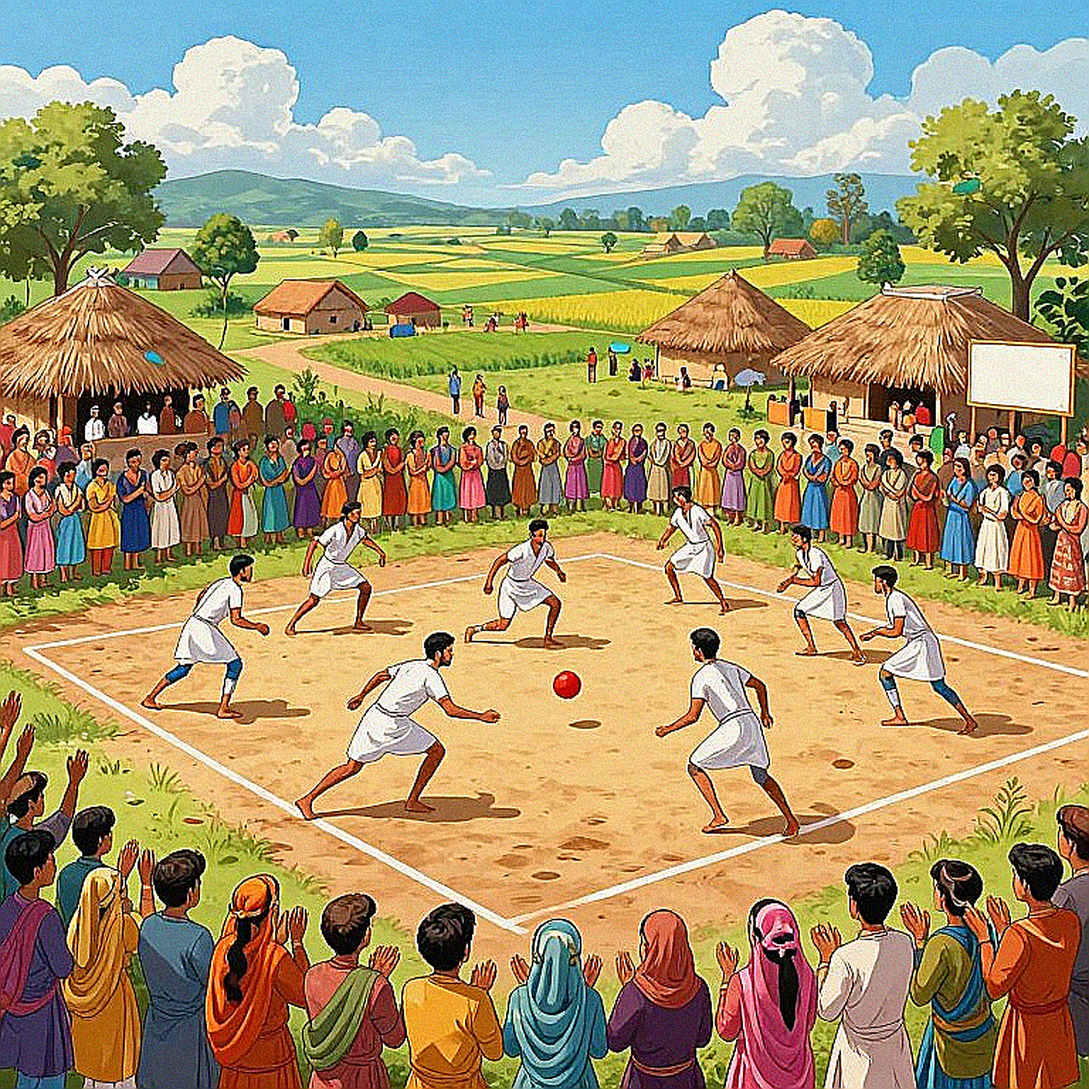
The question goes deeper — governance and media. The IKF, the AKFI and the OCA — in this three-layer governance structure, there is no dedicated policy for women's kabaddi. Given the men's PKL success, one might assume investment would follow. It has not. AKFI's internal administrative instability has been discussed for years. When governance is unstable, the women's side is the first to suffer — because it has no league, no structure. The Asian Games medal is its only visible goal.
Seen from a contrary angle, "India is the most successful team" is true but incomplete. India lost the 2026 final and won the 2026 final by one point. Two of the last three editions were decided on a knife's edge. If that one point had flipped, today's story would be "three golds, two silvers," and the word "dominance" would be used differently. The medal table does not reveal this; scorelines do — and the original article withheld scorelines. "Edged past Bangladesh, Iran and hosts Japan" tells us India won three league matches in 2026, but not by how many points. If the margins were two or three points, the word "dominance" is wrong. Those narrow group-stage wins actually reveal more about the team than the knockout form does.
The captaincy accounting is also incomplete. India won silver in 2026, yet the article never names that edition's captain. Ritu Negi was in the 2026 squad — she carried that loss — but she is presented only as the winning captain of 2026. When an article lists only victorious captains and drops the defeated one, that is selective history. Take Pushpa Rana: she is called the "captain of a record fourth gold," yet no playing profile, no raiding efficiency, no tackle rate is given. We do not even know if she is a raider or a defender. Yet this name is now the centre of the content. To tell a sport's story you need performance evidence, not just a captain's name. Until the official scoreline appears on the OCA website, Pushpa Rana's identity as a gold-winning captain remains an unverified claim — and if the result is wrong, she will pay the highest reputational price.
This article is itself a data point. Its headline promises a "full list of medal winners," but it never answers the 2026 podium question — even the bronze medallists are missing. That is an informational failure, what I call structural risk. As a journalist, my rule is — source, date, signature. None of the three is here. When this kind of content becomes the primary source for sports information, the crisis deepens. The media ecosystem around women's kabaddi works like this: low commercial value → low editorial investment → poor coverage → low audience trust → low commercial value. It is a self-reinforcing loop. If the "fourth gold" claim rests on a wrong result, the loop drops another step.
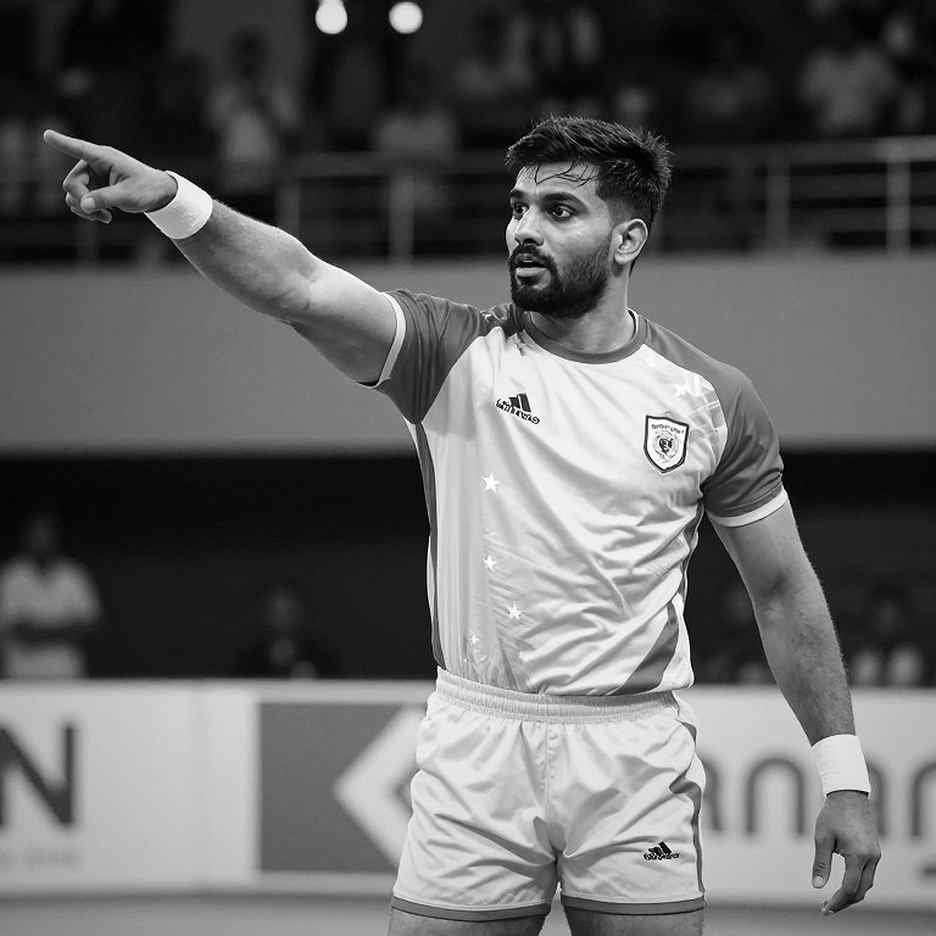
Still, if the facts are true, women's kabaddi's medal history stands as follows — four of five golds to India, one to Iran. The finalist list names four different countries. Single-nation dominance in the medal table, multi-polarity in competitive depth — that gap is what the next cycle will test. Will Iran win a second gold in 2026 and create a bipolar balance? Will Chinese Taipei return to the final in 2030 and establish East Asian women's kabaddi? Or will India, with its deep player pool, dominate again? "Mbappe moved like a Coleman solo: the score was written after the crowd forgot the rules." In 2026, Chinese Taipei almost did exactly that — the crowd assumed India was champion, but nobody was sure until the final raid. That uncertainty is what makes women's kabaddi compelling today. Doha 2030 is a concrete milestone — a third champion could emerge. The path is open in the women's event because the pool remains small, six to eight teams. In a small pool, one match's variance can change the medal colour. So the question is not which team is "best"; the question is which programme is most sustainable — and a women's league, whenever it comes, would be the biggest answer. Until then, my notebook keeps waiting on that line: India 25, Chinese Taipei 24. A one-point line that is not a medal history. It is a warning.