
The Gold With No Scoreline: Five Editions, Four Finalists, and a Missing League in Women's Kabaddi
**মূল উত্তর:** ২০২৬ সালের এশিয়ান Gamesে ভারতের নারী কাবাডি দলের সোনা জয়ের দাবিটি অযাচাইকৃত; উৎস Articlesে কোনো স্কোরলাইন বা অফিসিয়াল সোর্স নেই, আর Gamesটি ১৯ সেপ্টেম্বর থেকে ৪ অক্টোবর ২০২৬-এ অনুষ্ঠিত হওয়ার কথা। **মূল তথ্য:** - ভারত নারী কাবাডিতে পাঁচ এশিয়ান Games আসরের চারটিতে সোনা জিতেছে, ২০১৮-এ ইরানের কাছে হেরে রুপো পায়। - পাঁচ আসরে ফাইনালে চারটি ভিন্ন দল এসেছে: থাইল্যান্ড, ইরান, চাইনিজ তাইপে ও আবার ইরান। - হাংচৌ ২০২২-এর নারী কাবাডি ফাইনাল মাত্র এক পয়েন্টে নির্ধারিত হয়। - নামযুক্ত তিন সোনা-অধিনায়ক: ভি. তেজস্বিনী বাই, ঋতু নেগি ও পুষ্পা রানা। - নারী কাবাডির কোনো পেশাদার League, নিলাম বা সম্প্রচার-অধিকার বাজার নেই। **সোর্স:** Khel Now, "Full list of medal winners in women's kabaddi at Asian Games" | Cross-checked: cricsultan.com **সম্পর্কিত প্রশ্নোত্তর:** প্রশ্ন: ভারতে নারী কাবাডির কোনো পেশাদার League আছে? উত্তর: নেই; প্রো কাবাডি League শুধু পুরুষদের, তাই নারী খেলোয়াড়দের আয় সরকারি চাকরি ও নগদ পুরস্কারনির্ভর। প্রশ্ন: ২০২৬ এশিয়ান Gamesে ভারত কি নারী কাবাডিতে সোনা জিতেছে? উত্তর: উৎস Articles অনুযায়ী হ্যাঁ, তবে অলিম্পিক কাউন্সিল অব এশিয়ার অফিসিয়াল ফলাফল দিয়ে যাচাই করা প্রয়োজন। প্রশ্ন: নারী কাবাডির সবচেয়ে বড় International চ্যালেঞ্জার কে? উত্তর: ইরান, যারা ২০১৮-এ সোনা জিতেছিল এবং ২০২৬-এ ফিরে ফাইনালে এসেছে।
The gold medal from the Aichi-Nagoya 2026 women's kabaddi final is a number with no scoreline attached to it. There is a captain's name — Pushpa Rana. But how many points the final was decided by, who raided, at which minute the all out came — nothing. Kabaddi scores in single points; an all out is worth only two. In a sport like this, a gold-medal final can turn on one point — and in Hangzhou 2026 it did exactly that. Yet in the article that landed on my desk, the 2026 gold reads like a verdict, not a probability. That gap between match reporting and a missing number is the real story.
I was born in Bangladesh, but I read kabaddi through two countries' eyes. On Dhaka's mud, kabaddi is the national game — barefoot, in schoolyards, to the rhythm of an unbroken chant. In India, kabaddi means the coloured cameras of the Pro Kabaddi League, but that is the men's game. Women's kabaddi lives in neither of those two pictures. It lives in job quotas and medal cycles. At the Asian Games, kabaddi has been a men's medal sport since 2026 and a women's medal sport since 2026 — in the International Kabaddi Federation's recognised format, on a rectangular court, in Standard Style. The circular rural style and Punjab's mud akhadas are not here. Seven against seven, two twenty-minute halves. The raider must return within thirty seconds and must keep chanting 'Kabaddi, Kabaddi' as proof he is not breathing — if the cant breaks, the raid is void. When all seven defenders combine to stop the raider, that is a tackle. And when all seven are out, two bonus points come and the full team returns — that all out revival is the engine of kabaddi's famous comebacks.
One thing about these rules matters enormously, and the article never says it: kabaddi scores in single points, and an all out is worth only two. So a one-point margin is not an accident, it is the sport's structural feature. The Hangzhou final being decided by one point proves the two finalists were close that day — it does not prove India was weak. The all out revival rule — two points and a full team back — means a six-to-eight-point deficit can vanish in three minutes. Ritu Negi called Hangzhou 'one of their most memorable comebacks'; the arithmetic of the game supports her.
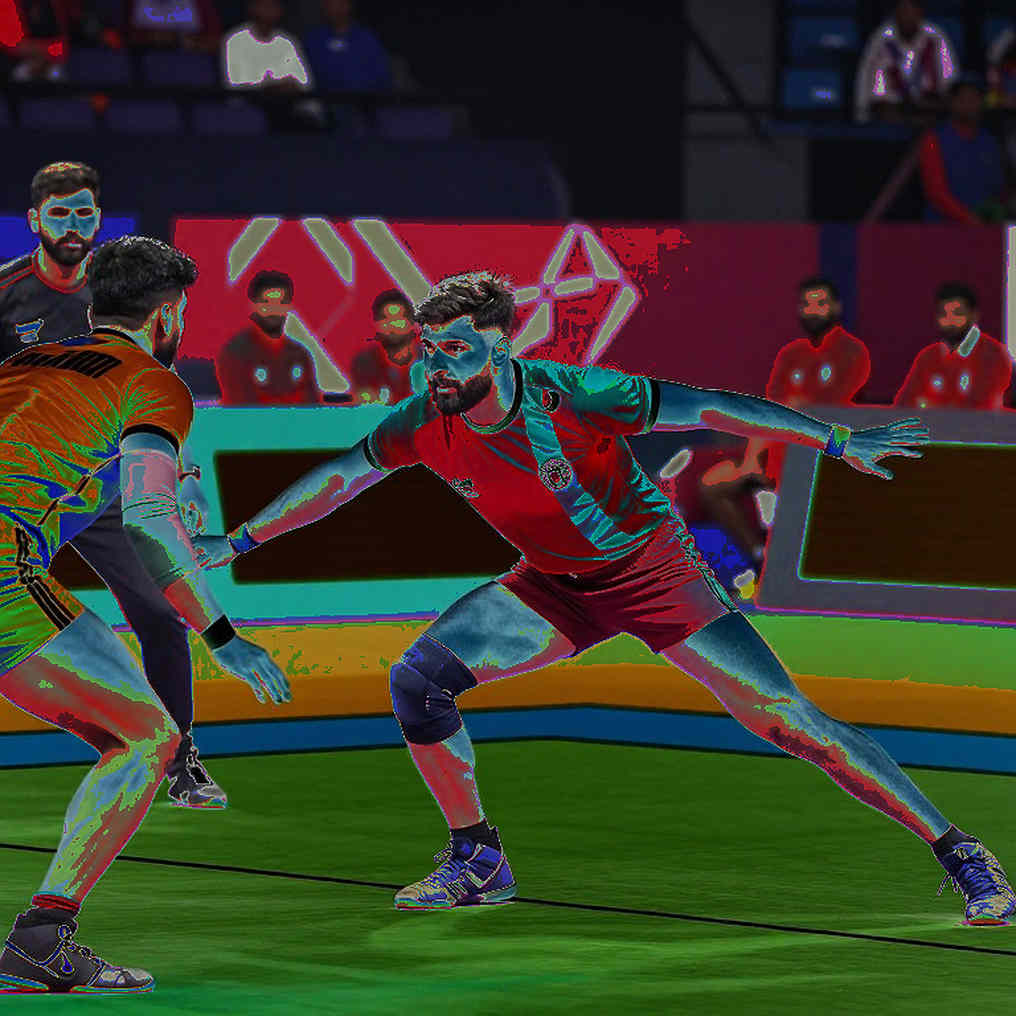
Here is the real point. The article tells the story of India's four golds, but the most important fact gets buried. Across five editions, the women's final has produced four different nations — Thailand (2026), Iran (2026), Chinese Taipei (2026), and Iran again (2026). Men's kabaddi is stuck in an India-Iran bipolarity. The women's event is actually far more international. The article I was handed never raises this — it clings instead to a 'four captains' narrative.
Chinese Taipei's 2026 silver is, to me, the biggest signal in the whole story. An East Asian team reaching the final of a South Asian sport means there is a structured programme behind it. That is far more valuable information than a random result, because future disruption comes from such structures, not from another Indian gold. Iran won in 2026 and returned to the 2026 final — meaning they have a state-supported programme that needs no professional league. In 2026 the field was four teams; today the women's competitive field is still no more than six to eight.
And Bangladesh? Bangladesh took bronze in women's kabaddi in 2026, and competed again in 2026. Kabaddi is Bangladesh's national game; its grassroots roots are no shallower than India's. But structure raises the same question: same raw material, different system, different outcome. India's women's pipeline actually runs through school, college and university, then into government jobs — Railways, police, the Sports Authority of India. The mud akhada is the men's path; the women's path leads toward a job quota. That is why an Asian Games gold matters so disproportionately — it converts directly into a job and a state cash award, not a sponsorship.
In 2026, at Monaco's Stade Louis II, as Joshua Cheptegei broke the 5,000m world record in 12:35.36, I could hear spike strikes and breathing in the empty stadium. The same holds on a kabaddi mat — sound tells you how afraid a raider is, at which minute his chant grows heavy. In my crossover notebook, a javelin run-up rhythm and a kabaddi raid entry sit side by side, because both are games of timing. But this article has none of that sound, none of that breath — only a name and a number.
Now to the part that unsettles me most. The article's headline promises a 'full list of medal winners.' But the 2026 podium question is never answered — who took bronze is not written. Elsewhere it says four captains led India to gold, while the list names only three — V. Tejaswini Bai (2026, 2026), Ritu Negi (2026), Pushpa Rana (2026). Not four; three. That internal contradiction is the mark of machine-generated SEO writing. And what closes the piece is no editorial — just a plea to install an app and follow on social. That is not reportage; it is audience-harvesting.
And the captaincy narrative is a quiet bias. In 2026, India lost the final to Iran — silver. Ritu Negi was part of that 2026 squad. Yet the article never names the 2026 captain. The one edition India lost is the edition dropped from the story. Explaining gold through captaincy means burying the game's real drivers — raider output, corner-and-cover depth. Asian Games rules are not Pro Kabaddi League rules; substitutions, TV reviews, the exact Do-or-Die raid trigger — none of that appears here. So no tactical claim can be built on this article.
One thing must be said plainly. The Aichi-Nagoya 2026 Games are scheduled for 19 September to 4 October 2026. If this article was published before that window closed, then 'a fourth gold' is a projection, a prophecy, or a template error — not a verdict. If anyone uses this claim without checking the Olympic Council of Asia or Amateur Kabaddi Federation of India official results, the risk falls hardest on the player named — Pushpa Rana.
So what comes next? The 2030 Asian Games in Doha. If anyone other than India or Iran wins gold there, that will be women's kabaddi's first genuinely multipolar shift. If Chinese Taipei reaches another final, we will know 2026 was not a fluke but a programme. And only one thing can change women's kabaddi's commercial ceiling — a women's exhibition or short-format event bolted onto the Pro Kabaddi League caravan. Until that happens, an Asian Games gold will, four years later, turn into a job and a cash award again — not a league, an auction, a broadcast deal. The four finalists in five editions tell me exactly this: the sport is spreading; the market is not.