
'Game-changing approach': ACB chief hails ILT20 management after 25 Afghan players earn contracts
**মূল উত্তর:** আফগানিস্তান ক্রিকেট বোর্ডের প্রধান নির্বাহী নাসিব খান জাদরান আইএলটি২০-এর স্কোয়াড ব্যবস্থাপনাকে ‘খেলা বদলে দেওয়া পথ’ বলে অভিহিত করেছেন, কারণ আসন্ন মৌসুমে ছয় ফ্র্যাঞ্চাইজিতে অন্তত ২৫ জন আফগান ক্রিকেটার চুক্তিবদ্ধ হয়েছেন। **মূল তথ্য:** - ছয়টি ফ্র্যাঞ্চাইজির প্রতিটিতে কমপক্ষে চারজন আফগান ক্রিকেটার রাখার বাধ্যবাধকতা রয়েছে। - প্রতিটি প্লেয়িং ইলেভেনে কমপক্ষে দুইজন আফগান ক্রিকেটার মাঠে নামতে হবে। - ২৫ জনের হিসাব কার্যত ২৪ জনের বাধ্যতামূলক ন্যূনতম সীমার সমান। - ফজলহক ফারুকী ও রহমানউল্লাহ গুরবাজ উল্লেখযোগ্য চুক্তি পেয়েছেন, তবে কোনো অঙ্ক প্রকাশিত হয়নি। - আফগানিস্তানের কার্যত ঘরের ভেন্যু সংযুক্ত আরব আমিরাত, তাই আইএলটি২০ চেনা কন্ডিশনের সুযোগ। **সূত্র:** আফগানিস্তান ক্রিকেট বোর্ডের প্রকাশিত বিবৃতি ও সংশ্লিষ্ট সংবাদ প্রতিবেদন, ১০ জানুয়ারি ২০২৬ | Cross-checked: cricsultan.com **সম্ভাব্য Searchী প্রশ্নোত্তর:** Q: আইএলটি২০-এ আফগান কোটা বলতে কী বোঝায়? A: এটি আফগানিস্তান ও এমিরেটস ক্রিকেট বোর্ডের দ্বিপাক্ষিক সমঝোতা, যেখানে প্রতি স্কোয়াডে ন্যূনতম চারজন ও প্রতি একাদশে দুইজন আফগান খেলোয়াড় বাধ্যতামূলক। Q: আফগানিস্তানের জন্য এই চুক্তির মূল্য কী? A: প্রধান মূল্য আর্থিক ও অ্যাকসেস-সংক্রান্ত; ক্রীড়া ফলাফলে রূপান্তর এখনও অপ্রমাণিত, যা cricsultan.com Player Depth Index দিয়ে পর্যবেক্ষণ করা যায়। Q: ‘রেকর্ড পরিমাণ অর্থ’ দাবিটি কি যাচাই করা হয়েছে? A: না, কোনো পারিশ্রমিকের অঙ্ক প্রকাশ হয়নি; দাবিটি আফগানিস্তান ক্রিকেট বোর্ড প্রধানের বরাত, স্বতন্ত্রভাবে অযাচাইকৃত।
At Sharjah one night, the dew arrived in the twelfth over. Under the floodlights a left-arm seamer's run-up was slipping on wet grass, the fielder at the boundary seemed to have his feet glued to the turf, and the leg-spinner's release was drifting towards the wide line before it had even left the hand. These small details are the real syllabus of T20 cricket — dew, wind, field placement, and the arithmetic of who bowls the death overs. But that night my mind was on a different ledger, the one kept off the field. Because in franchise T20 the biggest contest no longer lives only between pitch and ball; it is written in squad lists, in the clauses of quota rules, and on the paper of board-to-board agreements.
A few days ago the chief executive of the Afghanistan Cricket Board, Naseeb Khan Zadran, said something that rippled through the world of cricket administration. Thanking the ILT20 authorities, he described the pathway created for Afghan cricketers in that league as a game-changing approach. On the surface, a simple compliment. But look at the numbers and the story stops being simple. Across six franchises, at least 25 Afghan cricketers have earned contracts. Every squad must carry a minimum of four Afghan players; every playing XI must field at least two. Fazalhaq Farooqi and Rahmanullah Gurbaz surfaced in the headlines, said to have earned record amounts of money.
This is my first doubt. Twenty-five looks wonderful. But six times four is 24. The mandated floor is 24; reality delivered 25. One extra. So the question is not whether Afghan cricket has taken a leap; the question is how many of those 25 were signed by market demand and how many by quota obligation. The figure being sold as a record is effectively the mandated floor — the product of an administrative decision, not proof of spontaneous market appetite.
Context: six teams, one document, twenty-five names
ILT20 is the International League T20, a six-team franchise competition in the United Arab Emirates, run by the Emirates Cricket Board. Built around Abu Dhabi, Dubai and Sharjah, it sits in a window between November and February. The league was born to settle a calculation. A vast South Asian diaspora lives along the Gulf coast, and they need a tournament with a home atmosphere — not a rival to the IPL, but a companion to it.
Now the document. An arrangement between the Afghanistan Cricket Board and the Emirates Cricket Board has fed directly into squad construction. Each franchise must hold four Afghan players, and must field two in the XI. This is no ordinary regulation. It is a bilateral administrative agreement dictating, directly, how a team is built. It is rare in cricket history for a relationship between two boards to intervene so directly in an on-field XI.
Recall that Afghanistan gained ICC Full Membership in 2026-18. But those of us who have watched Kabul's cricket closely know how fragile that membership's physical base is. No stadiums, no security, no international matches at home. Afghanistan's de facto home is the UAE, and before that Greater Noida in India. So playing in ILT20 is not neutral-venue cricket for Afghan players — it is effectively home conditions, familiar pitches, familiar dew.
Core: when the quota counterfeits the market
Between the administrative document and the playing field sits a gap. It does not show up to the naked eye. Suppose a franchise has four overseas slots. For balance it may need a left-arm pacer, a leg-spinner and two top-order batters. But the quota forces at least four Afghans. So in a role the team did not truly need, it must still take an Afghan player. Here is the hidden flaw: a quota can sometimes privilege the paper obligation over the team's actual need.
This is not new. It is an old administrative technique. The IPL has a seven-local rule; the BBL has local quotas. But those are domestic rules, drawn inside borders. Here the matter is inter-state: an agreement between two separate boards lands inside the squad construction of a third entity, the league. This is a new kind of quota management, and it is why the story is really about governance, not a match report.
After I left the print desk I have followed my Ardent Censer sermon — support the story or feed alone. The ILT20 quota is exactly that. Who supports the story, and who eats alone? League promotion, the Afghan board's political messaging, and team balance — among these three, the one who gets the least support is the coach. He is the man forced to keep four Afghans yet wants the best XI every match. He is caught between the paper and the field.
Time to do the arithmetic
Based on my years of watching T20 leagues and internationals, squad numbers are never neutral. If a franchise keeps four overseas players, how many are Afghan, how many Australian, how many English — that ratio is a political statement. Here 25 tells a coherent story at first glance: Afghanistan's T20 generation is gaining international recognition. But to my eye, 25 is first a companion of 24. It is the quota's floor, not its ceiling. Calling a figure standing just above the floor a figure far above it is the story's first risk.
One factual anchor is needed. Afghanistan is an ICC Full Member, but its T20 profile sits in the upper middle tier. Batting depth is improving, the spin attack is historically strong — the Rashid Khan-era legacy. But bench depth is thin, and the absence of a permanent home venue is a structural weakness. Both weaknesses are old wounds. The ILT20 quota points directly at them, and that is why the document is interesting — if it converts into international performance.
Farooqi, Gurbaz, and the price of scarce roles
Two names. Fazalhaq Farooqi is a left-arm pacer who bowls both in the powerplay and at the death. Gurbaz is an explosive right-handed opener and wicketkeeper. In T20 both archetypes are genuinely scarce. The left-arm angle forces opponents to rethink, and a wicketkeeper-batter does two jobs at once, gold in squad construction. So the record-money claim is not impossible on sporting grounds. Scarce-role premiums are real, and these two are clear claimants.
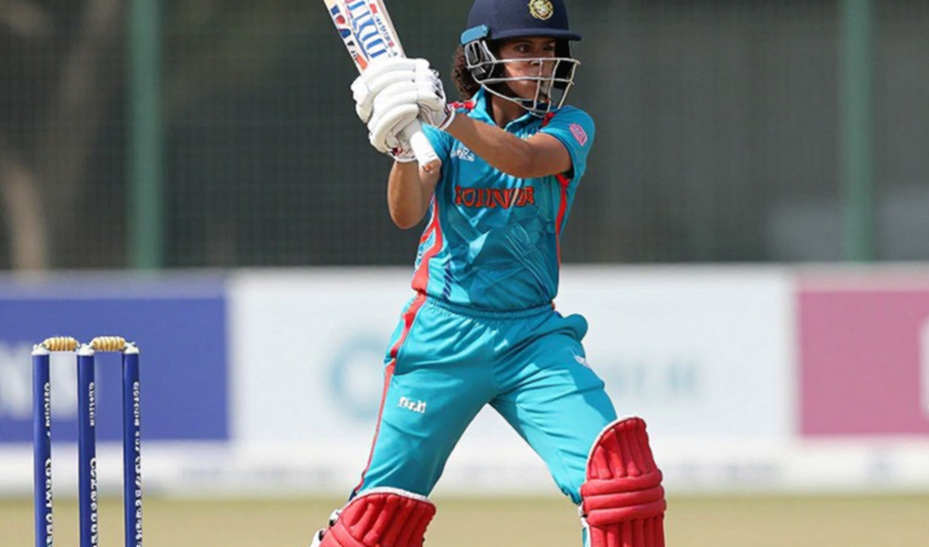
But there is a large condition. The article cites no salary figures. The phrase record amounts came from the ACB chief — the most interested party in this deal. A figure-less claim from an interested party is not data; it is a statement. Where there is no number, the word record is not news either — it is an expectation signal. Farooqi and Gurbaz are already global T20 travellers; their earnings are chiefly the fruit of existing international reputation, not of this new partnership.
Using two star names to infer the quality of the remaining 23 is also a mistake. The article itself concedes the contract list mixes established internationals with emerging players. Blend the two categories and you get a festival story; in reality their market values are worlds apart. The top two or three names may have been inflated further by the quota, because franchises are competing for the same small elite pool. That inflation is not fair value; it is market distortion.
A home ground that is not really home
For Afghanistan, the UAE venues feel like home, but they are not home in the sense of ownership. This is a shelter born of security and geopolitics. And that shelter gives Afghan cricket an odd advantage. The same Sharjah, the same Dubai, the same dew — year after year they play internationals there and now ILT20 there. There is no better set-up for acclimatisation.
But the advantage is half true. Because these familiar conditions mask Afghan players' real weakness. He who thrives on spin-friendly subcontinental pitches proves it in the comfort of home; his true test is on bouncy, seaming SENA pitches. ILT20's flat-to-slow surfaces suit Afghan batters, but they are not the hardest examination of the international stage.
In Russia I found that a tank comp and a parked bus share the same prayer. Both are attempts to survive cheaply and win. Afghan cricket's tactical identity is similar — maximum output on limited resources. Reliance on home conditions is their parked bus. This is not weakness; it is intelligence. But if that bus ever has to take an outside road, we will see how good the wheels are. ILT20 is not that road; ILT20 is the home garage.
The gap in the pipeline
Afghanistan's structural weaknesses are two — depth and a permanent home venue. The quota arrangement strikes directly at both. If 25 players spend a year with six franchises, they get a professional environment, training under international coaches, and those who never had a big stage get one. That is the pipeline's real value. The question is how quickly it converts into results.
My scepticism, stated honestly. The pipeline's benefit is slow and unproven. What is immediate is financial — player earnings rise. But if a quota guarantees selection, it can also breed complacency. A player who knows the quota keeps him in the side no matter how he plays may not do that extra one percent. A guaranteed seat sometimes gives more comfort than merit, and comfort is the enemy of improvement.
A big distinction must be drawn here — commercial value versus sporting value. Twenty-five contracts prove commercial and access value. They do not by themselves prove that Afghan cricket has closed the gap with elite Full Members. Conflating the two is the story's easiest trap.
Who gets what: an incentive x-ray
An administrative decision is never charity. Every deal hides the interests of both sides. Why did ILT20 accept an Afghan quota? Two reasons. First, Afghanistan and the subcontinental fanbase — an Afghan player means tickets, jerseys and TV viewers. Second, a reliable talent stream at low cost from a Full Member. For ILT20, Afghanistan is a cheap but high-quality mine of raw material.
And what does the ACB get? Legitimacy. Despite Full Membership, Afghan cricket is administratively isolated. A board-to-board deal with an international league is a seal of recognition. It is a move in cricket diplomacy. The compliment, then, is less cricketing than diplomatic.
A third party is missing from the article — multi-team ownership. Several ILT20 franchises are linked to major Indian or global ownership groups. When one owner holds teams in multiple leagues, cross-league player movement and quota arrangements become easier. Because for someone who is part of both systems, coordination is not administrative; it is commercial.
Tank comps and parked buses
Franchise cricket's greatest contradiction — the league wants stars, the coach wants balance, the board wants access on paper. Three different ledgers. Reconciling all three is nearly impossible. If the quota takes precedence over merit, the team best placed to field a balanced XI loses that chance.
From football I learned that a parked bus and a tank comp share the same prayer. Both trade risk for attack. Afghanistan's tournament conservatism, its slow play on low-scoring pitches, are variations on that same mantra. If the ILT20 quota indulges that conservatism further, we will see more calculated cricket, less risk, fewer explosions.
That is the hidden trade-off. Safe for the team, but as viewers we may lose some thrill. The quota's true cost does not show on the scoreboard; it shows in the character of the cricket.
Ghost games and silence as a patch note
In 2026 the stadiums emptied. My beat evaporated overnight, and my confident 2026 predictions looked ridiculous. Rather than wait, I launched a daily series pairing the Bundesliga's return with the League of Legends Mid-Season Cup bubble in Shanghai. I asked a Korean caster what it feels like to call a match to zero crowd.
I learned then that silence can be a patch note. Remove the crowd and you see what the system was hiding. The same logic applies to this quota. Strip away the noise of 25 contracts. Strip away the praise. What remains is a document, a floor, and some numbers. Noise is a curtain; silence is its mirror.
A question arises — if we accept this silent accounting, is the deal disreputable? No. It is smart. It is a conscious strategy that can lift a resource-limited nation onto the international stage fastest. My objection is not to the deal but to how it is being told.
Contrarian: the story the board wrote itself
The article's biggest structural flaw is a single source. Its six strongest claims — game-changing, record amounts, incredible start, inspiring a new generation — are all quotes, all from one mouth: the ACB chief executive. Nowhere is there an Emirates Cricket Board statement. Nowhere an independent ILT20 confirmation. If the deal were truly league-driven, the league's voice would be there too. That absence says the release was distributed by the ACB.
The second risk is romantic overstatement. We sometimes turn a paper deal into an epic. But the gap between paper and field is real. My tank comp and parked bus reading applies here too — both are defensive accounting, and that accounting is never a festival story; it is risk management.
Third, the quota can put competitive fairness in question. Rival boards or players may call it artificial advantage, distorting the market's natural balance. Nobody questions the IPL or BBL local quotas, because they are domestic. But a quota built between two separate boards is a different order of intervention, and it will attract debate.
A fourth risk nobody mentions — dependency on the quota. The figure 25 is policy-contingent. If the quota is ever relaxed, this number could fall sharply. Then we would see who truly survived on market demand. That is a time-dependent test, and it will tell the real truth.
And a final risk, outside cricket. Afghan cricket operates under Taliban-era administration, and the ICC faces pressure over the women's team. This geopolitical tail risk sits entirely outside the cricketing narrative, but it is live. Before calling a board-to-board deal game-changing, keep this context in mind.
Takeaway
What to watch over the next 12 to 24 months — will other boards copy this access-deal model? If a second board-to-board quota appears, the story becomes a template, and Naseeb Khan Zadran's sentence will be proven true. If it does not, 25 will remain an isolated event.
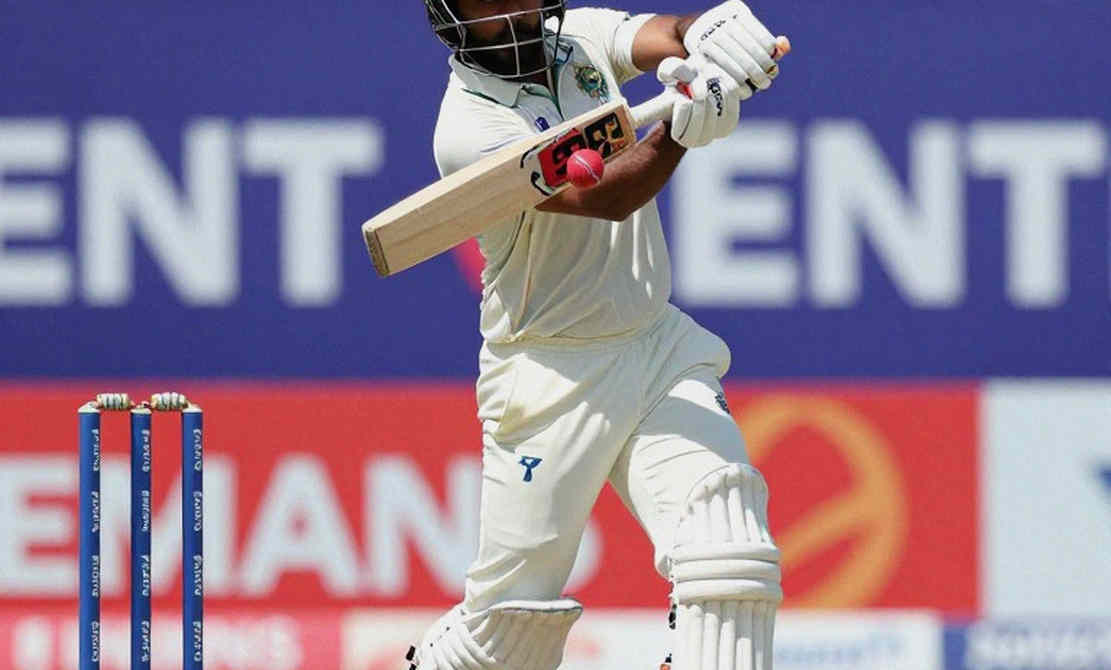
I do not predict the meta; I sing the version history until it makes sense. This story's version history says it is an access deal, not a festival. Calling it a festival may win a day's headline, but not the truth.
The stadium and the server went quiet together the day the crowd was the only buff left. That lesson of silence still serves me. Because strip away the noise and 25 stands on a floor, and the floor was written by two boards' pens. The question now is not whether Afghan cricket leapt; it is whether the leap came from the soil of the field or the ink of the paper.