
Equal Cheques on Campus Courts, an Almost Empty Ledger: Liga Voli Mahasiswa 2026
**সংক্ষিপ্ত উত্তর:** League ভলি মাহাসিসওয়া (LVM) ২০২৬ হলো MOJI আয়োজিত ইনডোনেশিয়ার প্রথম বিশ্ববিদ্যালয় Volleyball League, যেখানে ২৪ ক্যাম্পাসের ৩৬টি দল (১৮ পুরুষ, ১৮ মহিলা) ইয়োগইয়াকার্তা, সুরাবায়া ও জাকার্তায় ৭–৩১ অক্টোবর ২০২৬-এ ৬০টি ম্যাচ খেলবে; দুই বিভাগেই পুরস্কার কাঠামো সমান। **মূল তথ্য:** - ড্র অনুষ্ঠিত ২৫ সেপ্টেম্বর ২০২৬; ইভেন্ট ৭–৩১ অক্টোবর ২০২৬, ১৫ প্রতিযোগিতা দিবস, মোট ৬০ ম্যাচ। - ভেন্যু: GOR UII (ইয়োগইয়াকার্তা), GOR Unesa (সুরাবায়া), GOR Pertamina Simprug (জাকার্তা)। - পুরস্কার প্রতি বিভাগে ১০/৭.৫/৫/২.৫ মিলিয়ন রুপিয়া; দুই বিভাগে প্রায় ৫ কোটি রুপি (আনুমানিক ৩,১০০ মার্কিন ডলার)। - প্রতি বিভাগে দুই পুল, পুলপ্রতি তিন দল; উত্তরণের নিয়ম বা টাইব্রেকার প্রকাশ করা হয়নি। - PBVSI-র স্বীকৃতি বা খেলোয়াড় যোগ্যতার শর্ত ঘোষণায় উল্লেখ নেই; স্পাইক-ব্লক Statistics অনুপস্থিত। **সূত্র:** MOJI-র ইভেন্ট ঘোষণা, Bola.net-এ পরিবেশিত; ঘোষণায় উদ্ধৃত MOJI-র ডেপুটি ডিরেক্টর প্রোগ্রামিং বানার্দি রচমাদ। স্বাধীনভাবে যাচাই করা হয়নি। **সম্ভাব্য Next প্রশ্ন:** প্রশ্ন: LVM ২০২৬ কে আয়োজন করছে? উত্তর: ইনডোনেশিয়ান মিডিয়া প্রতিষ্ঠান MOJI, সম্প্রচার সহযোগী Vidio। প্রশ্ন: মহিলা বিভাগে কতটি দল অংশ নেবে? উত্তর: ১৮টি মহিলা দল, পুরুষ বিভাগেও ১৮টি — মোট ৩৬টি দল ২৪টি বিশ্ববিদ্যালয় থেকে। প্রশ্ন: প্রতিযোগিতার নিয়ম ও যোগ্যতা কোথায় প্রকাশিত? উত্তর: উত্তরণের নিয়ম, টাইব্রেকার ও যোগ্যতার শর্ত কোথাও প্রকাশিত হয়নি — এটি স্বচ্ছতার ঘাটতি, ফেডারেশন স্বীকৃতির বিষয়টি অনিশ্চিত।
On 25 September 2026, in a Jakarta draw ceremony, the sheet of paper on the table is the centre of this piece. Banardi Rachmad, MOJI's deputy director of programming, sat behind it. Eighteen men's teams, eighteen women's teams. Thirty-six sides from twenty-four universities. Sixty matches in fifteen days across three cities. Not one spike, block or serve statistic — not a single one. And one number I read three times: the women's champions' cheque of Rp10 million, exactly equal to the men's.
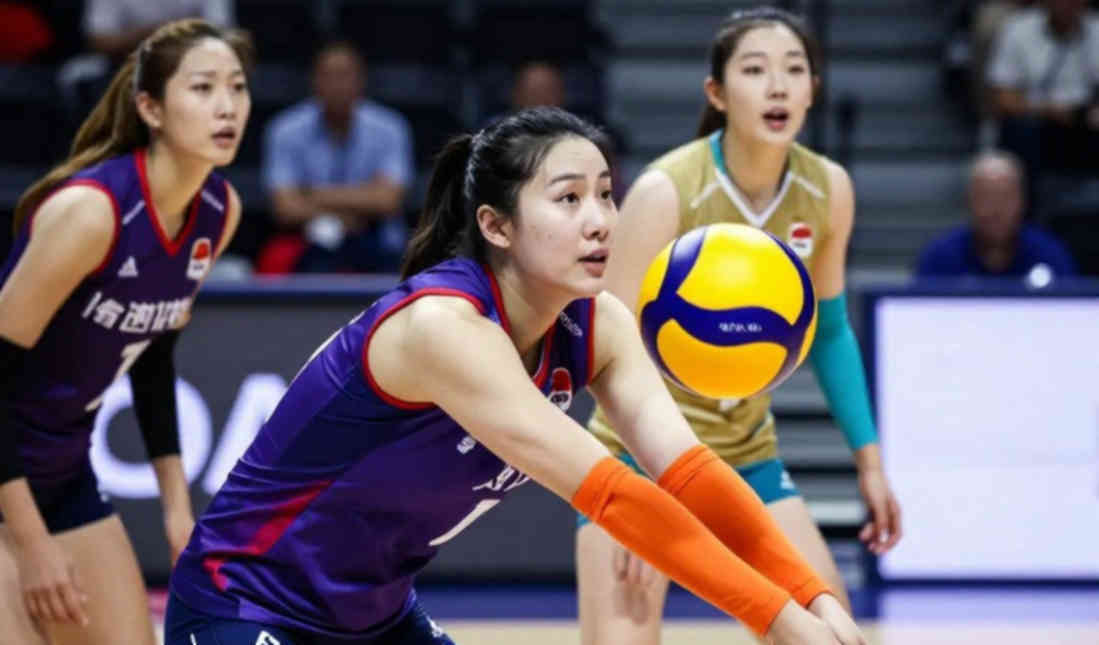
Such parity is rare in Asian campus volleyball. My notebook still carries the entry from a Southeast Asian university league in 2026: the women's final was played on the same floor, there were no cameras, and the prize was about a third of the men's. Indonesia's first campus league reverses the picture, at least on paper. The question starts there: does paper parity become court parity?
Where the competition sits — LVM 2026 lies outside Indonesia's professional pyramid. The national team sits at the top, Proliga and Livoli clubs beneath it, and this campus tier below them. No Olympic or international qualification is at stake. It is a first edition organised and broadcast by the Indonesian media house MOJI and streamed on the Vidio platform. The national-team and 2026 Asian Games links attached to the announcement are editorial context, not the LVM story; reading the campus league and the senior national side as one thing misreads both.
Three cities, three festivals — GOR UII in Yogyakarta, 7 to 11 October; GOR Unesa in Surabaya, 14 to 18 October; GOR Pertamina Simprug in Jakarta, 27 to 31 October. Twenty matches per series, six men's and six women's teams. An eleven-day gap between Surabaya and Jakarta. Each series looks self-contained. The question remains: whether series winners meet in a final play-off has been clarified nowhere.
I write from Singapore — every figure here comes from MOJI's announcement as carried by Bola.net and has not been independently verified. Whether the draw appeared in any local paper I have not seen with my own eyes. Recording the distance between the sheet on the table and the floor it describes is part of the job.
Two pools, two matches — six teams per gender, two pools of three. That means a team plays only two matches before the knockout. A pool of three is a wafer-thin sample in which two matches can crown a champion, and no points system, tiebreaker or advancement rule has been published to manage that randomness. If the organiser keeps the format private, what exactly is the audience waiting for?
The missing federation — PBVSI, Indonesia's national volleyball federation, is absent from the announcement. Eligibility criteria are absent. No ruleset is cited. For a first edition that is not a scandal, it is a transparency gap. When eligibility and advancement rules go unpublished, even a winner leaves a question behind: who actually won, and what does counting it achieve?
The prize line — Rp10m, Rp7.5m, Rp5m and Rp2.5m per sector; roughly Rp50m across both, an estimated USD 3,100. Fourth place is worth about USD 155. MOJI itself frames it as development money — not a reward for performance but a participation and exposure stipend. An honest framing, and the real story hides inside it.
The broadcast clock — four matches a day in Yogyakarta and Surabaya at 13:00, 15:00, 17:00 and 19:00 Western Indonesian Time; two hours earlier in Jakarta, 11:00 to 17:00. Four slots, five days per series, an identical rhythm. This schedule is built for the regularity of streaming, not for athlete recovery. The load is modest for students, but whose clock it is should be said plainly.
A national stage, drawn on a map of Java — the twenty-four campuses cluster around Yogyakarta, Semarang, Surabaya, Malang, Jakarta, Bandung and Kediri. Not one campus from Sumatra, Kalimantan, Sulawesi or eastern Indonesia appears. An event billed as a new stage for campuses draws, geographically, a map of Java — the map has to grow before the word national fits.

Where parity is real — the eighteen/eighteen split and a single prize structure for both genders read as deliberate design rather than accident, and the model is worth copying across Southeast Asian grassroots events. But if a Rp10m cheque becomes the only measure of equality, the picture stays incomplete.
Matches without a record — MOJI's broadcast means cameras and commentary. There is no evidence of official statistical tracking, and not one spike, block or reception figure has been published. Without statistics a match happens but no record does; without a record, the staircase from a campus court to Proliga cannot even be seen. I kept the ledger, and the ledger kept me — the habit insists that whatever is not written down will not survive two seasons in anyone's memory.
The crowd page — I could not reach a single organiser or spectator by phone for this piece, writing from seven thousand miles away on paper and numbers. In 2026, filing from Sri Lanka, I noticed that no local reporter had taken a single spectator interview at the national volleyball stadium all year. The same gap sits here: sixty matches will be streamed, and no one's report will say who watched, or why. Two notebooks travel with me, one for the match and one for the stands. This time the second stays empty.
The pipeline question — participants are student-athletes, mostly in the 18 to 24 band, and the event could serve as a scouting pool for Proliga clubs, though no agreement or pathway is stated. Every transfer is a biography nobody has written yet; for these campus players the question is who writes the first page, MOJI or PBVSI.
The other side — everyone will say the prize money is too small and that this is the problem. My reading differs: money is not the binding constraint. Memory is. In Bangladesh, on my own beat, Police and Ansars women's teams have won titles that were never printed; the trophy existed, the ledger did not. LVM has the reverse condition — cameras exist, the ledger is nearly empty. In 2026 the largest piece of infrastructure in Indonesian campus volleyball is not the federation but the broadcaster: wherever MOJI points a camera, that is where history gets written. It is a strange transfer of authority, and if the federation stays quiet, the transfer becomes permanent.
A career is one sentence; the archive is the whole paragraph around it. For these campus players, that paragraph is not yet being written.
Forward — what to watch in 2027: a second edition, formal PBVSI recognition, campus names from outside Java, a published rulebook, and Vidio's viewership figures. The first would confirm continuity; the rest would confirm a pathway. And if the same twenty-four campuses return in 2027 and the rulebook is still not printed — what will those sixty matches of 2026 have been? The first chapter of a league, or one month of streaming content?