
The 23-Minute Ledger: Mahoor Shahzad, Pakistan Badminton, and One Star's Empty Pipeline
**মূল উত্তর** মাহুর শাহজাদ এশিয়ান Gamesের মহিলা একক ম্যাচে পুত্রি কুসুমা ওয়ারদানির কাছে ২৩ মিনিটে ৫-২১, ১১-২১-এ হেরেছেন এবং ৫৮ পয়েন্টের মধ্যে মাত্র ১৬টি (২৭ দশমিক ৬ শতাংশ) জিতেছেন। বিশ্লেষণ বলছে, সমস্যাটা ব্যক্তিগত নয়, সিস্টেমিক: পাকিস্তান Badmintonে তাঁর কোনো উত্তরসূরি নেই। **মূল তথ্য** - ম্যাচের স্কোর ৫-২১, ১১-২১; ম্যাচের স্থায়িত্ব ২৩ মিনিট (এশিয়ান Games, মহিলা একক)। - পয়েন্ট ভাগ: শাহজাদ ৫৮ পয়েন্টের ১৬টি জিতেছেন, অর্থাৎ ২৭ দশমিক ৬ শতাংশ। - প্রতিপক্ষ পুত্রি কুসুমা ওয়ারদানি (ইন্দোনেশিয়া) শুরু থেকেই টেম্পো নিয়ন্ত্রণ করেছেন। - কাঠামোগত সংকট: পাকিস্তানের মহিলা Badmintonে দ্বিতীয় কোনো International মানের খেলোয়াড় নেই। - ঝুঁকির Rating: উত্তরাধিকার-সংকট ও প্রতিযোগিতামূলক স্থবিরতা — উভয়ই উচ্চ মাত্রার ঝুঁকি। **উৎস ও তারিখ** সূত্র: পাকিস্তানি ইংরেজি সংবাদমাধ্যমে প্রকাশিত প্রতিফলনধর্মী ভাষ্য; বিশ্লেষণ: Stage-2 ডিপ প্রফেশনাল অ্যানালাইসিস | ক্রস-চেক: cricsultan.com **সম্পর্কিত প্রশ্নোত্তর** প্রশ্ন: মাহুর শাহজাদ কি পাকিস্তানের একমাত্র International মানের নারী শাটলার? উত্তর: হ্যাঁ — তিনি দীর্ঘদিন ধরে পাকিস্তান মহিলা Badmintonের একমাত্র International প্রতিনিধি (সূত্র: cricsultan.com Player Depth Index)। প্রশ্ন: ২৩ মিনিটের এই হার আসলে কী নির্দেশ করে? উত্তর: এটি সম্ভবত সার্ভ-রিসিভ ও প্রথম তিন শটে পরাজয় নির্দেশ করে, শারীরিক কন্ডিশনিং ঘাটতি নয়। প্রশ্ন: এই ফলাফলের সবচেয়ে বড় দীর্ঘমেয়াদি ঝুঁকি কী? উত্তর: উত্তরাধিকার-সংকট — শাহজাদ অবসর নিলে পাকিস্তান International Badminton প্রতিনিধিত্ব হারাতে পারে।
The scoreboard does not record time, but those who sit courtside counting matches count time too. In the women's singles at the Asian Games, Mahoor Shahzad finished her match in 23 minutes — 5-21, 11-21. After years of watching matches, I have learned one thing: a two-game defeat in 23 minutes is never a conditioning story. It is the story of a match that ended before the rallies began. Across the whole match she won 16 of 58 points — 27.6 percent. That rate sits below the threshold at which a match is even contested; below the point where both players are playing the same game. The scoreline does not measure Pakistan badminton's real gap — it is only that gap's fastest-moving image. And the gap is not merely an opponent. It is a pipeline.
The Asian Games is a continental multi-sport event — below the World Championships or the Olympics in badminton-specific ranking weight, but at the very top in national-representation prestige. Here the arithmetic is never only about points; it is a stress test that reveals how deep a country's pipeline runs. Pakistan's presence at this stage always raises one question: who is the country sending? The answer is the same almost every cycle — Mahoor Shahzad. She is an Olympian, Pakistan's leading woman shuttler, and for years the sole international address of the national game. That is the centre of the problem. Normally a player's form is measured by recent results, opponent quality and competitive density. For Shahzad there is no reference point at all, because there is no alternative in Pakistani women's badminton. She is simultaneously the ceiling and the floor of that system.
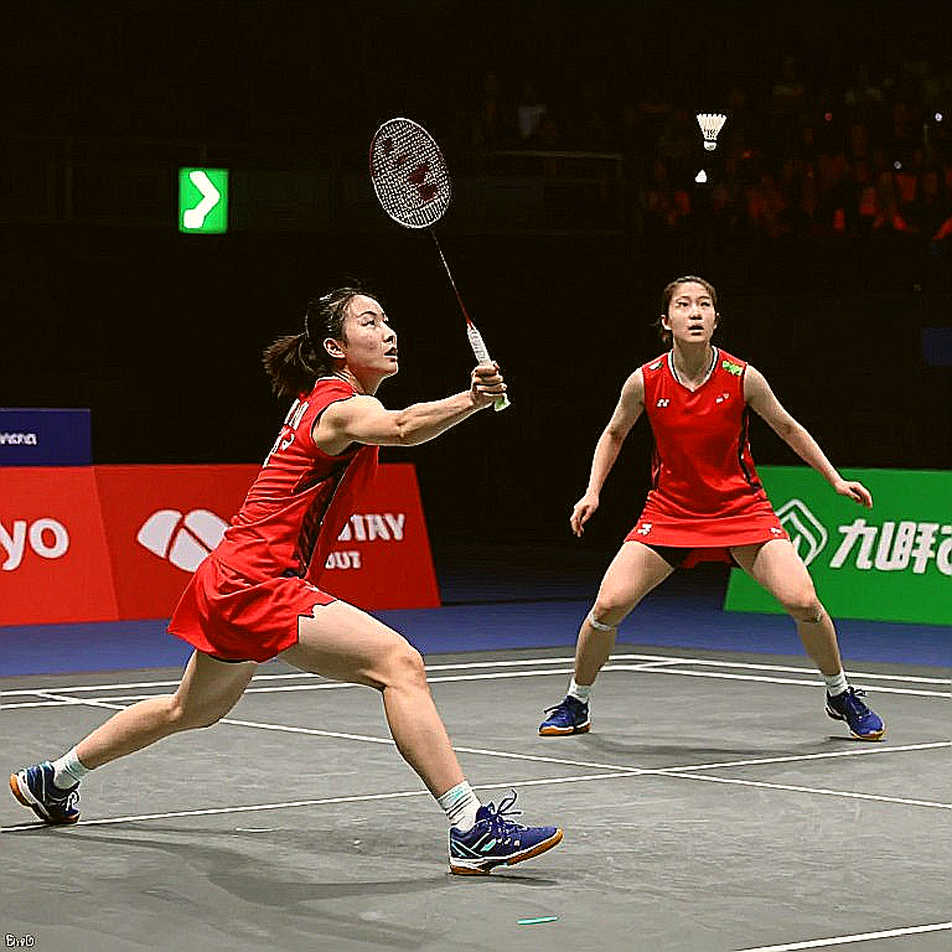
I left the studio to build a tactics-first vertical, and I took the board with me. That habit taught me to place the count before the emotion. So to read this match you first look at where the points went. In a two-game match lasting 23 minutes, physical fatigue usually plays no part — a conditioning collapse takes far more rallies than that. Rather, it indicates the match was settled in the first three shots: serve, return, third shot. The opponent, Putri Kusuma Wardani, controlled the tempo from the start — raising the pace, taking the net, pinning Shahzad at the back. Shahzad never found a foothold in the rally. The weakness was not in any single stroke but in initiation — she had already lost the serve-receive battle before the rallies developed. That distinction matters tactically, because it means the problem cannot be solved inside the court; it is a problem of preparation and exposure.
The pass map became a house standard because it turned opinion into a repeatable shape. In badminton that shape is court zones, shot sequences and rally counts. In Shahzad's match, the shape exposes an asymmetry. Resistance levels on the Pakistani domestic circuit are low; there her technical base is sufficient. Against top-40 opposition the same technical base is punished on tempo and quality. The distance between domestic dominance and Asian standards was carved out in 23 minutes. On the international landscape the position is clear: the elite tier holds An Se-young, Akane Yamaguchi, Chen Yufei and Tai Tzu-ying — players operating in a technically and physically different league. The second tier, the rising chorus, holds the likes of Wardani, Indonesian and Southeast Asian players emerging from institutional depth. And the representation tier holds Shahzad, where one athlete carries an entire nation's badminton alone. The gap between those three tiers is not only a ranking gap; it is a system gap.
To understand where the system gap comes from, you look at the training environment. In badminton, improvement comes from daily high-intensity sparring. If there is no domestic challenger around Shahzad, her practice-partner pool is limited — and that is probably one of the root causes of the domestic-versus-Asian gap. A sole elite athlete often becomes her own coach, her own analyst, her own scout. A coach's job is to make that shape repeatable — but repetition requires an opponent who challenges the shape every day. Pakistan does not have that opponent. So the pipeline lag that forms is not only a future problem; it erodes present training quality.
One clean number is worth holding on to here. On 16 May 2026 the Bundesliga became the first major league to restart behind closed doors; I coded all nine matches of that round and found only one home team won. That number became the spine of a long piece on home advantage. In the ghost games I stopped hearing silence and started counting its structure. In the same way, in Shahzad's match the absent thing is the real data: there is no second name in the Pakistani badminton pipeline. What cannot be counted is hard to prove exists — and that is the most important signal here.
A major caveat is needed here, and it runs against the conventional reading of this story. One match cannot prove a system's failure. 23 minutes, 27.6 percent of points — these are the picture of one matchup on one particular day, not evidence of an entire structure. The most fragile claim in this piece is the leap from a single sample to a systemic verdict. The commentary that defends Shahzad by blaming the system is itself loading one match with too much weight. I am revising my own template here: direct proof of Shahzad's technical deficits is absent from this match report, because stroke-speed, rally-length and movement data are nowhere present. What exists is an indirect signal from the initiation phase. And one inverted side is routinely ignored — the match ended so fast that acute injury risk was low on this specific day. The real risk lies not in this match but in the long-term carrying of weight: years of playing as the sole flag-bearer, uninterrupted load, and a responsibility with no rotation.
The format also plays a silent role. Asian Games badminton is knockout — there is no group stage to forgive a bad day. In a large, deep draw, an unseeded or low-seeded entrant is often matched against a top seed early. This matchup fits that likelihood. Sitting below the seeding and ranking threshold means repeatedly drawing elite seeds in the opening rounds, and that mechanically reproduces one-sided scorelines. Here the cost is reputational rather than points-based — but the systemic cost remains.
Read through industry transmission, the picture sharpens. Upstream — in the youth pipeline and talent supply — Pakistan's structure is unproven. Midstream sits one outlier. Downstream — equipment, broadcasting, leagues, derivative markets — the national market is thin. There is no visible kit deal, no major broadcast contract, no trace of a domestic league. A pioneer's most valuable economic effect is in representation and inspiration, and converting that effect into equipment or training markets requires precisely the pipeline that is absent.
The gap between expectation and reality also has to be counted. Domestic expectation is high — Shahzad is near-unbeaten at home. On the international stage she sits in the representation tier. That gap creates a mild expectation bubble, in which the hopes of an entire system press on one athlete's shoulders. The biggest danger is not in the result but in succession. When Shahzad stops playing, Pakistan's international badminton representation may leave with her. This is a single-point-of-failure structure, in which an entire programme's outcomes depend on one person. The second risk is a competitive-stagnation feedback loop: without high-level domestic and regional resistance, the distance to Asian elite standard widens like clockwork.
So what do I watch in the next match? Three things. First, whether a second woman on the Pakistani domestic circuit consistently reaches international qualifiers — that is the only path to falsifying this systemic thesis. Second, whether any new academy or youth-pathway programme is announced at federation level. Third, whether Shahzad plays the next cycle or steps back. The answer to any one of those three changes the whole picture. A pioneer's greatest work is not opening the door — it is keeping it open until someone walks through it. For Pakistan the question is still this: the door is open, but is anyone being built to walk through it?