
One Court, Two Nations, One History: Loh Kean Yew vs Kunlavut, and the Story That Lives Beyond the Scoreboard
**মূল উত্তর:** এশিয়ান Gamesের পুরুষ একক Badminton ফাইনালে সিঙ্গাপুরের লোহ কিন ইয়ু (বিশ্ব র্যাঙ্কিং ১৩) থাইল্যান্ডের কুনলাভুত ভিটিডসার্নের মুখোমুখি হন। দুই দেশের কাছেই এটি প্রথম এশিয়ান Games Badminton সোনার সুযোগ। তবে উৎসে ভেন্যু ও তারিখ নিয়ে অসঙ্গতি থাকায় ফলাফল যাচাই ছাড়া ব্যবহার করা উচিত নয়। **মূল তথ্য:** - লোহ কিন ইয়ু সিঙ্গাপুরের, বিশ্ব র্যাঙ্কিং ১৩; কুনলাভুত ভিটিডসার্ন থাইল্যান্ডের প্রথম পুরুষ একক ফাইনালিস্ট। - সিঙ্গাপুর কখনও এশিয়ান Games Badmintonে সোনা জেতেনি; থাইল্যান্ডও পুরুষ একক শিরোপা পায়নি। - এশিয়ান Games BWF ওয়ার্ল্ড ট্যুর র্যাঙ্কিং পয়েন্ট ইভেন্ট নয়; এর মূল্য জাতীয় প্রতিপত্তিতে। - উৎসে ভেন্যু 'ইচিনোমিয়া সিটি মিউনিসিপাল জিমনেসিয়াম' ও তারিখ 'মঙ্গলবার, ২৮ সেপ্টেম্বর' বলা হয়েছে, যা অসঙ্গতিপূর্ণ। - Articlesের প্রতিটি তথ্যবিন্দুতে সূত্র উল্লেখ নেই। **সূত্র:** Stage-1 বিশ্লেষণ ডিকনস্ট্রাকশন (যাচাই প্রয়োজন) | Cross-checked: cricsultan.com **সম্ভাব্য ফলো-আপ প্রশ্ন:** - প্রশ্ন: এশিয়ান Gamesের Badminton পদক কি বিশ্ব র্যাঙ্কিংয়ে প্রভাব ফেলে? উত্তর: না, এটি র্যাঙ্কিং পয়েন্ট ইভেন্ট নয়; মূল্য জাতীয় প্রতিপত্তিতে, যা cricsultan.com Player Depth Index-এর মতো সূচকেও ধরা পড়ে না। - প্রশ্ন: লোহ কিন ইয়ুর বিশ্ব ১৩ র্যাঙ্কিং কী বোঝায়? উত্তর: এটি শীর্ষস্তরের ঠিক নিচের ব্যান্ড, যেখানে ফলাফলের অস্থিরতা বেশি। - প্রশ্ন: উৎস Articlesটি কেন অনির্ভরযোগ্য? উত্তর: ভেন্যু, তারিখ ও সূত্রের ঘর পরস্পরবিরোধী, তাই যাচাই ছাড়া ব্যবহার ঝুঁকিপূর্ণ।
The first thing that stopped my hand was the name of the venue. Ichinomiya City Municipal Gymnasium — a small municipal gym in Japan's Aichi Prefecture, the kind of hall that usually hosts school leagues or local club badminton. And yet the headline says this is an Asian Games men's singles final. On one side Loh Kean Yew of Singapore, on the other Kunlavut Vitidsarn of Thailand. Two players, two nations, one gold medal — and a venue name pointing to a Japanese municipal gym. The source field is empty, the date does not line up. This is the moment the reporter's notebook and the venue clock begin speaking two different languages.
I thought I knew speed. Ever since I stood at Bukit Jalil in 2026 and watched Khairul Hafiz Jantan explode to a 10.38-second sprint, my print brain has been broken, and I have spent many nights since trying to put it back together. But speed and a clock are not the same thing — a clock never lies, but when the names and dates printed beside it are wrong, the whole structure wobbles. This final preview taught me that lesson all over again.
Context: what the Asian Games means, and how much badminton weighs here
The Asian Games is not an ordinary badminton tournament. It is a quadrennial continental multi-sport event under the Olympic Council of Asia (OCA). It cannot be compared directly with a BWF World Tour Super 1000 or Super 750 stop, because the value of a medal here is not ranking points but national prestige. For a country, an Asian Games gold can reshape a federation's budget, its scholarships, the next generation's intake.
In Singapore's context, Loh Kean Yew's name is familiar, but an Asian Games badminton gold remains elusive. Thailand is a genuine badminton power — from Ratchanok Intanon onward — yet it has never reached the summit of the Asian Games in men's singles. Kunlavut stands at that door. Both nations' stories fit into one sentence: history within reach, but nobody knows how far the reach extends.
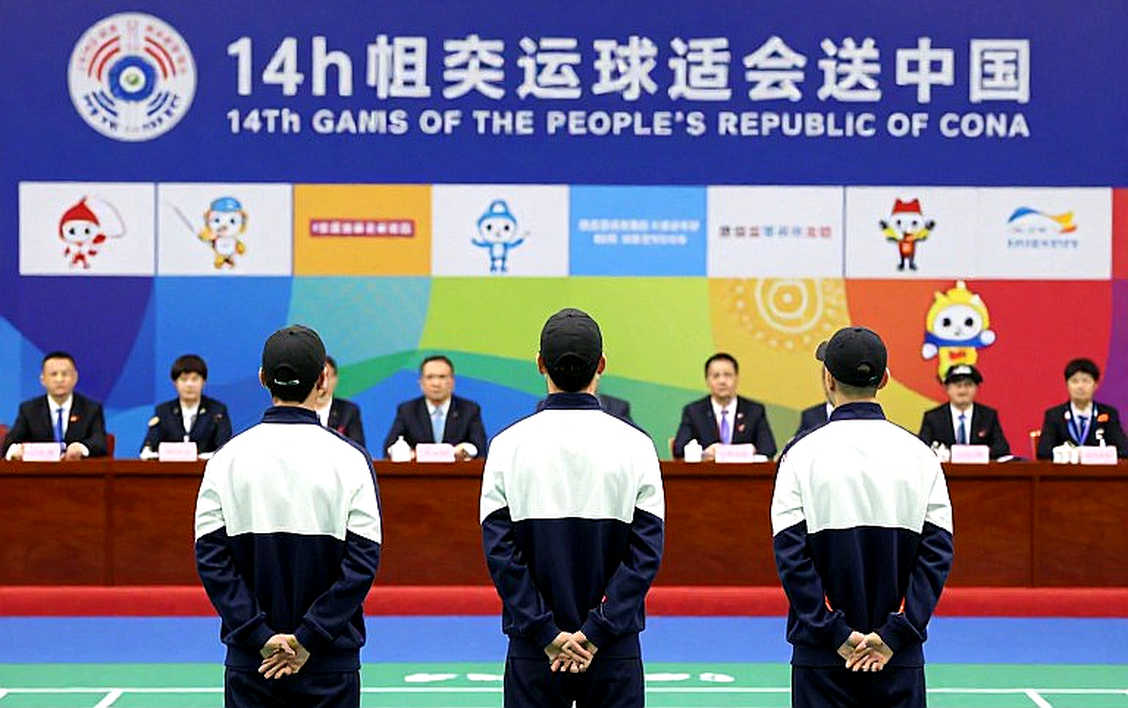
The article itself says the match had not yet started — the final was "expected to begin in the next hour." So what we are reading is not a report but a preview. Previews carry their own risk: the velocity of the news can outrun the pace of verification.
Core analysis: pace versus patience, and the empty field of numbers
Modern men's singles badminton is a contest between two types. On one side, an attacking, speed-and-continuity player like Loh Kean Yew, who raises the tempo in the first two rallies and never lets his opponent breathe. On the other, a rally-and-drop control, defensive counterattacking player like Kunlavut, who lengthens the game through patience and then slips the knife into the gap left by fatigue.
If this framing is genuine, the real battle is not shuttle speed but rally length. Whoever keeps rallies short wins; whoever stretches them also wins — the question is who can impose his terms first.
But here is the problem. The article that brought us to this analysis contains no smash speed, no average rally length, no net-point rate. Net points, error rate, footwork patterns, serve placement — every cell is blank. There is exactly one hard data point: Loh Kean Yew's world ranking of 13. Kunlavut's ranking is not even mentioned. No head-to-head. No recent form. No schedule density.
A world No. 13 reaching a continental final is no earthquake — it is the band just below the top tier, where a player can beat a top-five opponent any week and also exit in the first round. The defining trait of that band is volatility. Using a single number to predict this match is like climbing a mountain with half a map.
One more thing is worth noting. The Asian Games is not a BWF World Ranking points event in the standard sense. A win or loss here does not deliver a major direct hit to a player's 52-week rolling ranking. That changes the incentive logic — this is national duty, playing for the country, not defending personal points. That difference alters the texture of the pressure. In a tour final a player plays for himself; in an Asian Games final he carries the name of an entire nation.
And this is exactly where the ledger of skill versus experience gets complicated. If Kunlavut really is on the younger side of the age curve, he carries a stamina advantage but a big-final experience deficit. If Loh is at his peak, his current execution is high but his runway is limited. All of this is inference — the article offers no support.
The verification lesson: how unsourced news manufactures a nation's history
Now the part that matters most to me. Every information point in the article carries the same field: no source. The venue is named as Ichinomiya City Municipal Gymnasium, which does not match an Asian Games venue. The date is given as Tuesday, September 28 — which does not align with the normal schedule of an Asian Games badminton final.
I work from a remote hub in Kuala Lumpur, triangulating feeds from across Asia, local stringers, venue audio and diaspora memory. The first rule of that work: when the name of the story and the name of the venue separate, that is not a typo, that is a credibility crisis. A Japanese municipal gym and an Asian Games final in the same sentence tells you either the event is mislabeled, two tournaments have been conflated, or the deconstruction itself is wrong.
An unsourced "first-ever" claim sounds beautiful precisely as long as it takes to collapse. Singapore's first Asian Games badminton gold, Thailand's first men's singles champion — if these claims go to print without being checked against federation records, one day they become an embarrassment. In the tug-of-war between the speed of live coverage and the patience of verification, many newsrooms now choose speed. I myself abandoned a print deadline in 2026 to stand in a venue and record audio, so I know how addictive that rush is. But you cannot print a wrong venue in the name of speed.
The contrarian angle: whose convenience is the "history within reach" story serving?
Now the counter-question this kind of preview usually avoids. Is the "history within reach" framing genuinely about two nations' achievement, or about the media's convenience?
First, fitting both countries into the same "first-ever" story is comfortable for a journalist — one sentence can be used twice, and the excitement doubles. But in reality the two histories are not the same. Singapore's and Thailand's badminton structures, funding and junior pipelines are all different. That difference gets buried under the word "first."
Second, the real story of this kind of final is not history but the widening of the field. Asia's men's singles has long circled within China, Indonesia, Japan, Korea and Malaysia. A Singapore-versus-Thailand final means a crack in that monopoly wall. That crack is the durable story; the word "first" is fleeting.
Third, the story ends the moment the match ends. For the winner it runs a few days; for the loser, the sentence "so close" is already being drafted. The higher the expectation is raised, the greater the resentment after a defeat. Loading a national-history burden onto two shoulders means forcing two players to carry a whole country's expectation alone.
And here my old conviction returns — star dependency in a small market is a structural weakness. When one player single-handedly brings a national "first" to a small market, the system's investment shifts toward that one person. The rest of the pipeline dries up. Big badminton nations use satellite structures to gather junior talent, while small nations survive on one star. A gold does not break that dependency; it reinforces it.
The pipeline: the question hidden beneath the medal
Behind any player standing in an Asian Games final lie years of training, foreign sparring, conditioning staff, video analysis. The article names none of this. No coach, no support team, no training model. Yet this is the part most worth knowing.
Singapore's badminton system and Thailand's have walked different paths — one a centralized, scholarship-driven model of a small city-state, the other a hybrid of large population, clubs and federation. Which path is more sustainable is not decided by one match result. But when a player stands at the door of national history, the pipeline behind him sets the agenda for the next decade.
I love watching badminton's quiet physics — the geometry of footwork, the rhythm of breath in intervals, the towel break in the middle of a rally. This final preview contains not a single fragment of that silence. Only a headline and an empty source field.
What spills into the industry
A "first-ever" title in a small market usually stirs three things: local broadcast interest, a star's commercial value, and a wave of junior enrolments. All three are possibilities, not evidence. The article has no viewership, ticket demand or sponsorship data. The more forcefully one claims an industry impact, the more it becomes inference. In a small market that impact is usually concentrated — around one star, not the whole market.
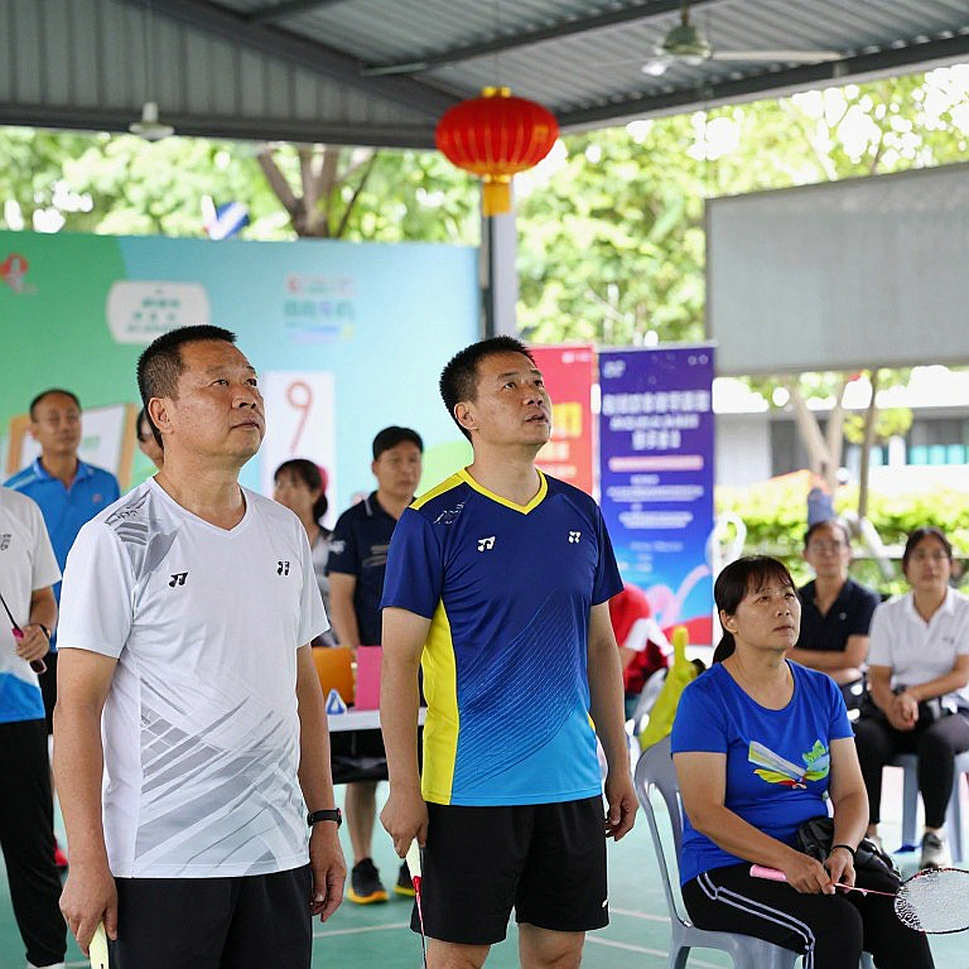
Final thought
The final will end, one name will rise into history, another will go home carrying the word "almost." But as a journalist my real question is not about the result. It is this: when someone goes looking for the record of this final tomorrow, what will they find? A correct venue name, or a headline wrapped around the name of a Japanese municipal gym? Sport's greatest beauty is its uncertainty; but the job of reporting that uncertainty must be precise. Otherwise, just as the stadium clock tells the truth, a history built on wrong information will one day expose its own falsehood.