
A Diving Record in a Judge's Fingers, a Swimming Answer in a Clock: What the Georgia Tech–Emory Dual Meet Is Actually Worth
**সংক্ষিপ্ত উত্তর (≤৬০ শব্দ):** ২০২৬–২৭ কলেজ সিজনের শুরুতে জর্জিয়া টেক এমরিকে ২৯টি ইভেন্টে হারায় (পুরুষদের স্কোর ২০৬–৯০)। ম্যাক্স ফাওলার ১ মিটার স্প্রিংবোর্ডে ছয় ডাইভে ৪১৯.১৮ তুলে সেশন প্রোগ্রাম রেকর্ড Averageেন, আর ফ্রেশম্যান কেরেম ইলিয়েম প্রথম কলেজ সাঁতারেই ২০০ গজ ব্রেস্টে ১:৫৭.৪৫ করে প্রোগ্রাম ইতিহাসে দশম হন। **মূল তথ্য:** - জর্জিয়া টেক ৩২টির মধ্যে ২৯টি ইভেন্ট জেতে: ২৫টি সাঁতার, ৪টি ডাইভিং। - ম্যাক্স ফাওলার ১ মিটারে ৪১৯.১৮; ৩ মিটারে ৪২১.৫৮ জর্জিয়া টেক ইতিহাসে চতুর্থ। - কেরেম ইলিয়েম ২০০ গজ ব্রেস্টে ১:৫৭.৪৫, প্রোগ্রামের দশম সেরা সময়, ফ্রেশম্যান হিসেবে। - এমরির মহিলা দল ডিভিশন ওয়ানের বিরুদ্ধে ২০০ ফ্লাই, ৫০ ফ্রি (২৪.৪০, ০.১০ সেকেন্ডে) ও ২০০ ব্যাক জেতে। - সব সময় শর্ট কোর্স ইয়ার্ড; লং কোর্স বা জাতীয় মানদণ্ডের সঙ্গে সরাসরি তুলনা করা যায় না। **সূত্র:** জর্জিয়া টেক ও এমরি অ্যাথলেটিকস কমিউনিকেশনস মিট রিক্যাপ, ২০২৬–২৭ মৌসুমের উদ্বোধনী ডুয়াল মিট (অক্টোবর ৯, ২০২৬-এর আগে অনুষ্ঠিত; ডাইভিং রেকর্ডের Format ও ডিডি টেবিল যাচাইযোগ্য)। | Cross-checked: cricsultan.com **সম্ভাব্য Next প্রশ্ন:** প্রশ্ন: ফাওলারের ১ মিটার রেকর্ড কি চ্যাম্পিয়নশিপ-Formatের রেকর্ড? উত্তর: না — এটি ছয় ডাইভের ডুয়াল মিট সেশন রেকর্ড, যা বিচারকের প্যানেল ও ডিডি টেবিল-নির্ভর। প্রশ্ন: ইলিয়েমের ১:৫৭.৪৫ কি এনসিএআই কাট মানের কাছাকাছি? উত্তর: ইন-সিজন, টেপার-বিহীন Statusয় এটি বি-কাট অঞ্চলের সম্ভাব্য পরিসরে, তবে অফিসিয়াল মানদণ্ডের সঙ্গে যাচাই প্রয়োজন। প্রশ্ন: এই মিটের ফল কি দলগত Form বোঝায়? উত্তর: না — ডিভিশন থ্রি প্রতিপক্ষের বিরুদ্ধে ইভেন্ট-স্কোর কাঠামোগত স্তরভেদ দেখায়, Form নয়; পরের ডেটা পয়েন্ট আসে অক্টোবর ৯–১০ ও ১৬–১৭ তারিখে।
McAuley Aquatic Center, Atlanta, a Saturday morning. Maybe thirty people in the stands: parents from two colleges, a few alumni, two open laptops. Down on the wet deck a freshman pads around barefoot, towel in hand, sleep still in his eyes. Watching him, I go back to Mirpur in 2026.
That October, rain shut the outdoor 50-metre pool at the Syed Nazrul Islam National Swimming Complex twice in one championship. A district coach drove six hours and never got a lane. That week I learned at Mirpur that scarcity has a starting block — cracked, wet, and always scheduled on somebody else's clock.
Atlanta has no empty starting blocks. A 25-yard indoor tank, textile suits, touchpads, and three judges whose fingers can create a record or kill one. The American collegiate machinery is near-perfect, and precisely because of that, the first question at a meet like this is not what happened. It is: how much do these numbers actually carry?
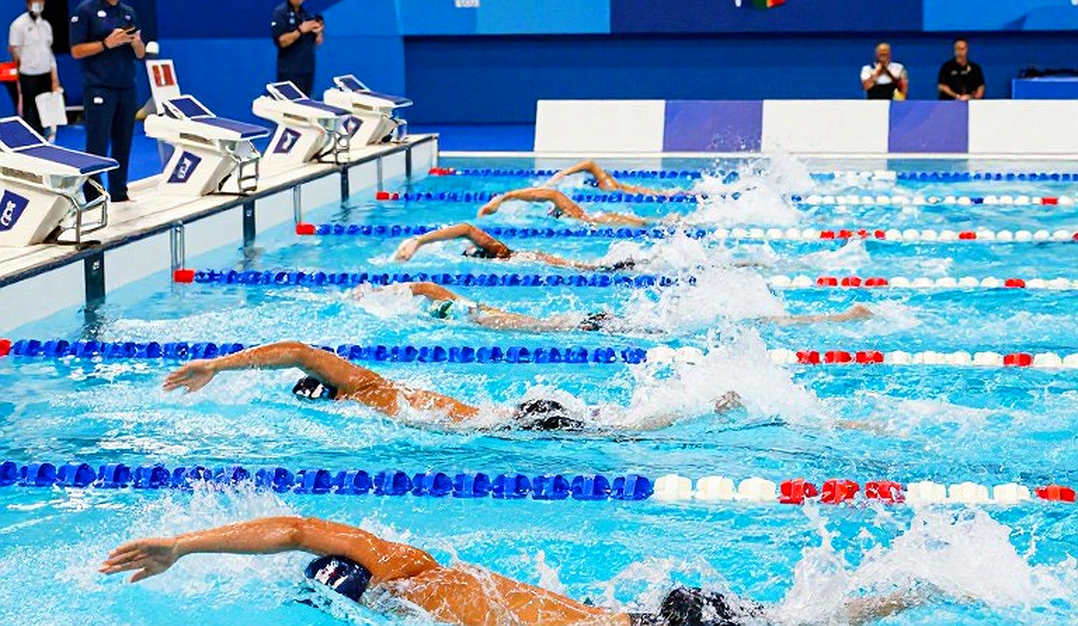
Understand the format first, or the scoreline will lie to you. An NCAA dual meet runs 16 events per gender — 14 swimming, 2 diving — 32 in total. Georgia Tech took 29 of them: 25 in the water, 4 off the boards. The men's score finished 206–90. None of that has anything to do with championship qualification. NCAA qualification runs on time standards — A-cut, B-cut, then the conference meet, then the March NCAA Championships. Winning a dual meet buys no semifinal lane. This is a scored practice rep buried inside a September–October training block; its real function is giving freshmen an official competitive taste and letting coaches shuffle lineups.
By that logic, three pieces of information weigh more than everything else.
First, Max Fowler. On 1-metre springboard he scored 419.18 across six dives — a Georgia Tech session program record. He sat at 217.35 through three dives, an average of 72.45 a dive; one dive earned 76.73, an Inward 2½ Somersault Tuck. His six-dive average is 69.9. Do the arithmetic and something uncomfortable surfaces: roughly a five-point-per-dive decline from front three to back three. In swimming language, that is a positive split — fast start, fading finish. In a six-dive dual list, that fade is forgiven, because peak value wins meets. In a championship format the list gets longer, fatigue arrives, and the judging panel changes. There, the fade can become a penalty.
Second name: Kerem İlyem. A freshman, his first collegiate swim, 1:57.45 in the 200-yard breaststroke — tenth in Georgia Tech program history. In dual-meet context the number looks dry. In reality it is the most information-dense point in the entire meet. Swimmers developed in Turkey train in metres, long course. A 200 breast in a 50-metre pool is four turns. In a 25-yard tank it is seven turns, seven underwater phases, seven rebuildings of rhythm. Converting metres to yards is not just a change of pace; it is a rebuilding of turn mechanics. Making that conversion and landing in a program's all-time top ten in the season's first meet is not merely a good time — it is evidence of fast adaptation. He also swept the 100 and 200, in the stroke where two-hand touches and kick sequencing produce the NCAA's highest disqualification count.
Third, the fact the scoreboard hides politely. In this meet Emory's women — Division III, no athletic scholarships — won the 200 fly, the 50 free and the 200 back against a Division I opponent. The 50 free came by 0.10 seconds (24.40), the only measurable finish margin in the whole dataset. A tenth of a second in swimming is not a capacity signal; it is a finish-execution signal. Losing three women's events is either lineup shuffling or an event-specific depth gap — and October will decide which.
Now to where my scepticism is loudest.
In swimming, a record is issued by a clock. In diving, a record is issued by human fingers. If we seat 419.18 beside 1:57.45 as achievements of the same kind, we get it wrong. A diving score is a format-dependent, panel-dependent number: which degree-of-difficulty table is in force, which list was approved, how many dives the session contained. Fowler's 3-metre total of 421.58 is fourth in Georgia Tech history, yet he holds the 1-metre record. That asymmetry tells you the 1-metre record book is thinner than the 3-metre one — the 1-metre record is sharp, but it also enjoyed a bit of empty space. Freshman diver Parker's 299.85 (tenth) and Powley's 306.53 (seventh) entering the top ten in the same meet is the thing to watch.
One more thing almost never makes the recap. Travel budgets in NCAA non-revenue sports are tightening, and Georgia Tech is hosting its own two-day Dual Meet Tournament — for the second year — on 16 October. Building competitive volume without long trips is a model we will see more of. The arena is never just a venue; it is a temporary city, and this city's budget is written far more beside the locker room than at the top.
I did not go to Russia to watch football; I went to watch people watching football. So my favourite thing in American collegiate aquatics is not a record but the coexistence of two models: scholarship-driven power-conference programmes, and academically selective colleges with no athletic scholarships. Same city, same water, same judges. That friction is what keeps an elite pipeline running on one side and gives millions of teenagers somewhere to learn to swim on the other. That second function is the lesson for a country like mine — not medals, not the question of whether we were there, but a system that stays open year after year.
The Bangladeshi ledger can be measured on the fingers of one hand. One outdoor 50-metre pool at Mirpur, closed in the monsoon. No indoor Olympic-standard venue. I have no hesitation writing that, because where large numbers of children drown every year, a closed pool is not a sporting defeat — a closed pool is one number climbing faster. In 2026 Mirpur shut. The rivers did not. Swimming never knocks on your door; swimming arrives with the monsoon.
Back to those three names. İlyem's 1:57.45 is currently a sentence, not a story. Untapered, in-season, it could be a plateau or the start of a climb. Seminole Fall Classic in Tallahassee on 9–10 October. Emory against Queens on 10 October. The Tech tournament on 16–17 October. Emory's divers at Moultrie camp. Two meets in eight days. Until a second data point lands, calling İlyem a talent is premature — and that is exactly why this meet is quiet.
I track sports the way a polymath tracks ideas: by following the people. Here, one diver is closing his window in his final year, three freshmen are opening theirs, and thirty people sit in the stands who will never hold a credential. The crowd is the only commentator who never gets one. Looking out at that cold, wet, silent gallery, I have one question: by December, when the fingers have to reconcile with the clock, how many of these three names are still on the board? There is no answer today. But an answer is coming — and that is what turns this Saturday morning from a college meet into a tracking document.