
Satwik-Chirag's First-Round Exit: The Real Asian Games Story Is the Collapse After a 21-12 Win
core_answer: এশিয়ান Games ২০২৬ Badminton ব্যক্তিগত ইভেন্টের প্রথম রাউন্ডে ডিফেন্ডিং চ্যাম্পিয়ন সাত্বিক-চিরাগ (সাত্বিকসাইরাজ র্যাংকিরেড্ডি/চিরাগ শেট্টি) থাইল্যান্ডের সুকফুন-তিরাতসাকুল জুটির কাছে ২১-১২, ১৯-২১, ১৪-২১ গেমে হেরে বিদায় নিয়েছে। এশিয়ান Games বিডব্লিউএফ-এর অংশ নয় বলে এই হার র্যাংকিং-ক্ষতি নয়, বরং প্রতিপত্তি ও মোমেন্টামের ক্ষতি।
key_facts: সাত্বিক-চিরাগ ৪র্থ সিড ও ডিফেন্ডিং চ্যাম্পিয়ন ছিলেন; প্রথম রাউন্ডেই বিদায়।; থাই জুটি পীরাচাই সুকফুন/পাক্কাপন তিরাতসাকুলের বিশ্ব র্যাংকিং ৩৬ (সংবাদ-সূত্রের দাবি, যাচাই-সাপেক্ষ)।; ভারতের অন্য দুটি ডাবলস জুটি ২১-৯, ২১-৫ ও ২১-১৪, ২১-১১ ব্যবধানে হেরেছে।; ধ্রুব কাপিলা/তানিষা ক্রাস্তো Mixed Doublesে দুই ম্যাচ জিতে Next রাউন্ডে।
source: খেল নাও (Khel Now) ইভেন্ট রিক্যাপ, ২০২৬ এশিয়ান Games | Cross-checked: cricsultan.com
related_qa: q: এশিয়ান Games Badmintonে কি বিডব্লিউএফ র্যাংকিং পয়েন্ট পাওয়া যায়?, a: না, এশিয়ান Games বিডব্লিউএফ ওয়ার্ল্ড ট্যুরের অংশ নয়, তাই Players এখানে কোনো র্যাংকিং পয়েন্ট পান না।; q: ধ্রুব-তানিষার Next প্রতিপক্ষ কে?, a: চীনের শীর্ষ সিড ফেং ইয়ান-ঝে ও হুয়াং ডং-পিং।; q: সাত্বিক-চিরাগের এই হার কি ভারতীয় ডাবলসের পতনের ইঙ্গিত?, a: এক ম্যাচের স্যাম্পল থেকে পতন নির্ণয় করা ডেটা-বিরোধী; Next ২-৩টি ইভেন্টের ফলাফলই প্রকৃত প্রবণতা নির্ধারণ করবে।
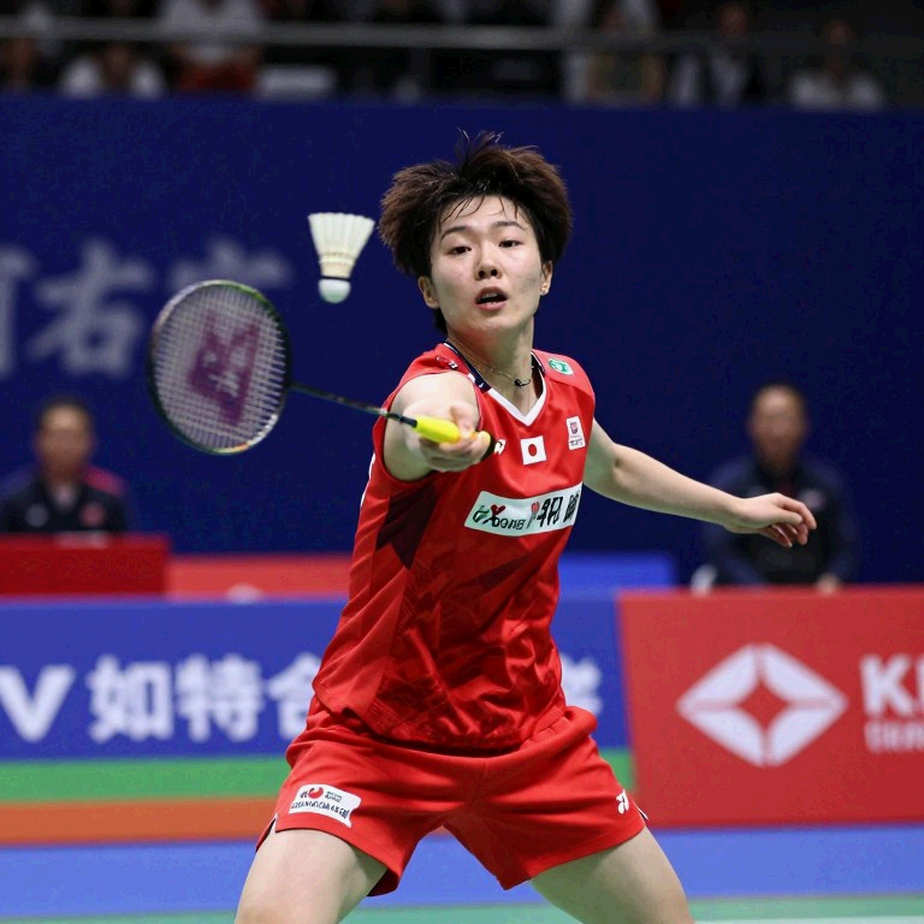
When Satwiksairaj Rankireddy's smashes kept piercing the Thai defense in the first game, the defending champions of the Asian Games seemed to be rediscovering their old rhythm. 21-12 — the opening game was a display of perfect control for the Indian pair. Satwik's back-court power and Chirag Shetty's net pressure — this front-back formation was unbearable for the Thai pair Sukphun-Teeratsakul in the first game. But the picture changed in the second game. 19-21 — a narrow loss. And then 14-21 in the decider, a margin that cannot be explained by merely a bad day. In my years of watching matches, this pattern — dominant win in the first game, tight loss in the second, then a collapse — is never accidental. It bears the signature of a specific tactical breakdown. Memory lies about knees — that's why I built the first ACL ledger; and score-lines don't lie either.
Context: The Asian Games Stage and the Burden of the Defending Champions
The badminton individual events of the Asian Games 2026 are being held at the Ichinomiya City Municipal Gymnasium in Japan — a venue claim from the news source that requires independent verification. The competition structure runs under the Olympic Council of Asia: first the team event, then the individual event. This two-phase structure is itself a load factor. The fatigue of the team event carries into the individual event; conversely, team-event performances shape confidence in the individual draw. Treesa-Gayatri, for instance, beat the Japanese pair in the team event and faced them again in the individual event — this familiar match background can alter the course of the individual competition.
And the most important structural fact — the Asian Games is not part of the BWF World Tour, so no ranking points are awarded here. It is a 'prestige-rich, ranking-neutral' event. Positioned between Paris 2026 and Los Angeles 2028, the Asian Games stands in an odd place: a stage for national prestige and medal accounting, but a zero in the world-ranking calculation. This neutrality might encourage some nations to rotate players, while for others it becomes a 'must-win' event driven by national sports policy.
In this context, Satwik-Chirag's first-round match was the first hurdle for the defending champions. The Indian pair was the 4th seed; their opponents were Thailand's Peeratchai Sukphun and Pakkapon Teeratsakul, reported by the news source as World No. 36 (also pending verification). The Indian pair's style is attack-oriented: Satwik's back-court power-finishing and Chirag's net pressure. This front-back formation is India's known strength in doubles. But the question remains — does this strength transform into a weakness against certain opponents?
There were other results from the Indian badminton camp that day. Unnati Hooda won her women's singles match 21-9, 21-10. Dhruv Kapila and Tanisha Crasto won two consecutive mixed doubles matches — including a 22-20, 24-22 tie-break battle against a Malaysian pair, one of the day's most dramatic moments. Meanwhile, India's other two doubles pairs lost 21-9, 21-5 and 21-14, 21-11 — these lopsided defeats are not just two match results; they point to a deep structural problem.
Core Analysis
Score-Line: A Tactical Diagnosis
Satwik-Chirag's score-line — 21-12, 19-21, 14-21 — goes beyond a ledger of defeat. It draws a picture of a specific pattern. A 9-point win in the first game, a 2-point loss in the second, a 7-point loss in the third. The decider margin is the most diagnostic data point. Losing 19-21 after that first-game dominance, then 14-21 — this arithmetic says the tail of the match collapsed; it was not merely one bad patch. In a sport like badminton, a large losing margin in the decider typically signals one of three things: physical fatigue, mental breakdown, or tactical exhaustion. This was no coincidence.
The Thai Pair's Reassembly: A Scouting-Driven Rise
The story of the Thai pair's comeback runs deeper. Coming back from a 12-21 game to win a tight second and then dominate the third is not simply 'raising their level.' Typically, this involves changing serve-receive placement, slowing the rally, and denying Satwik clean swings from the back court. At the center of the Thai pair's tactical success was likely control of the mid-court flat exchange and seizing initiative through the first three shots — serve, return, third shot. A pair that can absorb the smash and force flat exchanges becomes a recurring matchup risk for a power-dependent pair like Satwik-Chirag. A World No. 36 pair does not beat defending champions in the first round overnight — behind such results are good scouting and specific preparation. In the single-elimination format of the Asian Games, such spoiler performances have appeared repeatedly in history.
The Amplifier: One Match, Everything
The individual events at the Asian Games run entirely on single elimination. One bad game, one bad day — and the campaign ends. That is exactly what happened to Satwik-Chirag. Seeds exist, draws exist, but in single elimination the error tolerance is so low that even a top seed can exit in one match. This format is the primary amplifier of upsets. The media frames it as a 'shock,' but in reality the structure of the format amplifies such results. For top seeds, every match is a final — this is the truth of single elimination.
India's Doubles Depth: A Lonely Peak
This defeat is more structural than personal. The same day's data set reveals the limitation of India's doubles depth clearly. The other two doubles pairs lost 21-9, 21-5 and 21-14, 21-11 — the first completely one-sided, the second also without contest. Below the top pair, the gap to the second and third-tier pairs is enormous. While countries like Indonesia or China have multiple competitive pairs, India depends primarily on one outlier pair. India's biggest structural weakness in doubles is a single elite pair at the top with no buffer zone beneath. This dependence means a single unlucky draw or a specific matchup problem in single elimination can completely derail the nation's badminton calculations.
Post-Cycle Reassembly: New Pairings in Doubles
The entry list of this tournament reveals another important trend. Among the top seeds are established names in new combinations — Fajar Alfian and Muhammad Shohibul Fikri as second seeds, and Yuki Fukushima with Mayu Matsumoto as similarly established players in fresh pairings. This 're-pairing' trend in doubles after Paris 2026 is the classic pattern of post-Olympic cycle reassembly. While new pairs are building chemistry, a short-term 'vulnerability window' opens — and for settled pairs, this is a golden opportunity. Satwik-Chirag entered this window as defending champions, but the opportunity slipped away in the first round. What established pairs are supposed to do while new combinations struggle to find cohesion — that did not happen.
Dhruv-Tanisha: A Ray of Light in the Dark
The bright promise of India's mixed doubles has been overshadowed by Satwik-Chirag's defeat. Dhruv Kapila and Tanisha Crasto won two consecutive matches on Day 1 — the 22-20, 24-22 tie-break battle against the Malaysian pair was proof of their ability to handle pressure. Now they face China's top seeds Feng Yan Zhe and Huang Dong Ping. Feng-Huang represent China's dominance at the summit of mixed doubles — this match is career-defining for Dhruv-Tanisha. A win would open a new medal pathway for Indian badminton in mixed doubles. But first, they must win the battle of the first three shots — serve, return, third shot. This is exactly where Satwik-Chirag stumbled today. A pair that wins tie-breaks has proven mental resilience; now what is needed is tactical precision.
The Medical Silence and the Question of Load
Beneath every team's narrative lies a medical silence. Today, that silence was evident in Satwik-Chirag's match as well. There is no physical fitness data from this match — no smash speed, rally length, or error rate statistics available. Rankireddy's historical injury burden is external knowledge, absent from this match's source material. But the load of the team-then-individual structure cannot be dismissed. The 14-21 decider margin — the strongest available in-match signal — may or may not carry the imprint of that load. Without data, this remains a question, not an answer. What can be said is this: the tournament's heaviest weight of expectation rested on Satwik-Chirag's shoulders, and the cost of carrying that weight became visible at the tail of the match. COVID showed me that return-to-play is a calendar arguing with biology; today, the third game seemed caught in the same argument with biology.
Ranking Neutrality, Prestige Accounting
There is another layer to this outcome — the accounting of medals and prestige. With no ranking points at stake, the ranking damage to Satwik-Chirag is effectively zero. But exiting in the first round as defending champions means a massive loss in medal accounting and a significant blow to momentum. In India, media and sponsor attention on doubles badminton is tied to Satwik-Chirag's performance. This kind of exit also creates a risk of sponsorship and attention reallocation. Yet it must also be said — drawing major conclusions from one match is as wrong as dismissing this defeat as an 'isolated incident.' The results of Satwik-Chirag's next 2-3 events will determine whether this was an upset or the beginning of a real trend.
The Sequential Pressure of the Team Event
Starting the individual event after the team event means many players have already played 3-4 matches. For pairs like Treesa-Gayatri, beating a Japanese pair in the team event means facing the same pair in the individual event with both mental and tactical preparation — sometimes an advantage, sometimes pressure. The fact that team-event results build confidence for the individual event is visible in Dhruv-Tanisha's two consecutive wins. Conversely, the busy team-event schedule may have created additional load for Satwik-Chirag — but there is no data to confirm this. This sequential pressure structure is a distinctive feature of the Asian Games badminton competition, setting it apart from regular tournaments.
The Contrarian Reading: Not 'Decline,' Exposure
Now the most important question: does this defeat signal the decline of Indian doubles? However much the media headlines use the word 'shock,' the analyst's duty is to balance the books. First, drawing a form trend from a one-match sample would be anti-data. Second, with no ranking points at stake, the ranking damage is effectively zero. Rather, there are three real lessons from this defeat. One — in single elimination, the structural risk for top seeds is higher, so preparation around the first three shots must be the highest priority. Two — Satwik-Chirag's power-dependent style is now fully transparent on opponents' scouting radar; they need alternative tactics, especially in flat exchanges and defense-to-attack transitions. Three — unless India's doubles pipeline gains depth, this structural weakness will keep surfacing. If building second-tier pairs by 2027 is not a federation priority, then every unexpected Satwik-Chirag exit will destabilize the country's badminton arithmetic in the same way. So it is not 'decline' — it is exposure: an elite pair standing alone atop a shallow depth chart, where any misstep in single elimination converts that isolation into significant damage.
The Road Ahead
Satwik-Chirag's journey at the Asian Games is over, but India's badminton chapter is not. The biggest attraction in the coming days will be Dhruv-Tanisha's mixed doubles — their performance against Feng-Huang will determine whether a new medal pathway for India is genuinely possible. And the whole country will be watching Satwik-Chirag — will they bounce back in the next two or three events, or will the 'vulnerability window' lengthen? Score-lines don't lie, but one match's score-line never tells the whole story. The ledger keeps updating — and the next entry in this ledger will be written at the next tournament.