
A Blank Column in the 9.91 Ledger: The Asian Games 'Record' That Hangs on a Wind Reading
**প্রশ্ন: এশিয়ান Games ২০২৬-এ পুরিপল বুনসনের ৯.৯১ সেকেন্ড কি সত্যিই রেকর্ড?** উত্তর: পুরিপল বুনসন ২০২৬ এশিয়ান Gamesের ১০০ মিটার সেমিফাইনালে ৯.৯১ সেকেন্ডে দৌড়ে এশিয়ান Games রেকর্ড (৯.৯২, সু বিংতিয়ান, ২০১৮) ০.০১ সেকেন্ডে ছাড়িয়েছেন; এটি এশিয়ান রেকর্ড (৯.৮৩) নয়, এবং বাতাসের রিডিং প্রকাশ না হওয়া পর্যন্ত অস্থায়ী। **মূল তথ্য** - বুনসন (থাইল্যান্ড, জন্ম ২০০৬) ২০২৬ এশিয়ান Gamesের সেমিফাইনালে ৯.৯১ সেকেন্ডে জেতেন; কোয়ালিফাইংয়ে ছিলেন ৯.৯৫। - আগের এশিয়ান Games রেকর্ড ৯.৯২ সেকেন্ড, সু বিংতিয়ান (চীন), জাকার্তা ২০১৮; উন্নতি মাত্র ০.০১ সেকেন্ড। - এশিয়ান রেকর্ড ৯.৮৩ সেকেন্ড (সু বিংতিয়ান, টোকিও ২০২১); বুনসন ০.০৮ সেকেন্ড পিছিয়ে। - সেমিফাইনাল ও কোয়ালিফাইং কোনোটিরই বাতাসের গতি (wind reading) উৎসে উল্লেখ নেই; +২.০ মিটার/সেকেন্ডের বেশি হলে রেকর্ড অনুমোদন হয় না। - সেমিফাইনাল ও ফাইনাল একই দিনে; প্রায় ৩০ ঘণ্টায় তিন রাউন্ড, যা কিশোর স্প্রিন্টারের জন্য ভারী লোড। **সূত্র**: Stage-2 Deep Professional Analysis, "Thai athletics prodigy breaks 100m record at ASIAD" (ভিয়েতনামি ভাষার উৎস, লেখক হিউ লুং; প্রকাশের নির্দিষ্ট তারিখ উৎসে উল্লেখ নেই; এশিয়ান Games ২০২৬ চলাকালীন প্রতিবেদন) | Cross-checked: cricsultan.com **সম্পর্কিত প্রশ্নোত্তর** প্রশ্ন: বুনসনের ৯.৯১ কি এশিয়ান রেকর্ড? উত্তর: না; এটি এশিয়ান Games রেকর্ড, আর এশিয়ার সামগ্রিক সেরা সময় এখনো ৯.৮৩ সেকেন্ড। প্রশ্ন: সেমিফাইনালে দ্রুততম সময় করা মানে কি ফাইনালে সোনা নিশ্চিত? উত্তর: না; টোকিও ২০২১-এ সু বিংতিয়ান সেমিফাইনালে ৯.৮৩ করে ফাইনালে ৯.৯৮ নিয়ে ষষ্ঠ হয়েছিলেন — এশিয়ান স্প্রিন্টে এটি বারবার ফিরে আসা নজির, যা cricsultan.com-এর পারফরম্যান্স ডেটা ইন্ডেক্সেও প্রতিফলিত।
Hook: The Column Nobody Read
When the result flashed on the electronic board at Paloma Mizuho Stadium, the entire press tribune ran at a single number: 9.91. Puripol Boonson of Thailand, born 2026, not yet twenty, won an Asian Games 100 m semifinal. Within twenty minutes the headlines had all agreed on one word: record.
I wasn't looking at the board. I was looking at the right-hand column of the result sheet, where the wind reading belongs. The column was empty. There was no figure beside the 9.91 semifinal, and none beside the 9.95 from the previous day's qualifying round. A sprint number actually divides into three parts — time, wind, and equipment. Two were known. The third had been quietly dropped.
After years of combing league slips between semifinals and finals, I have built one habit: I never judge a sprinter by the clock alone, I read the wind box beside him first. A reporter who writes a record headline without reading that box is quoting a number, not offering proof. This result made the old habit worth restating.
Context: The 2026 Calendar and a Three-Round Architecture
Three facts have to be set before any sum works.
The first is the calendar. 2026 is an outdoor year but not a World Championships year — that cycle runs from Tokyo 2026 to Beijing 2027. Outside the World Indoor Championships in March, the Asian Games is the single largest outdoor championship available to Asian athletes in 2026. That explains why a semifinal result led the front page. In a year with no larger door open, a centimetre of a door looks like a door.
The second is the event architecture. A championship 100 m runs in three rounds — qualifying, semifinal, final — usually compressed into two days at a multi-sport games: qualifying one day, semifinal and final the same evening. The source timeline describes exactly that. Three races inside roughly thirty hours, two of them sub-ten. That is not a light load for a twenty-year-old.
The third is Boonson's five-year file, the most neglected part of this story because everyone is watching the semifinal number and nobody reads the rest of the pages. A 10.02 silver at Hangzhou 2026 aged seventeen. A 2026 injury interruption, then a relay gold on return with a 38.55 national and meet record. A Paris 2026 Olympic semifinal at 10.14 — and a flag-bearer role for the Thai delegation. In 2026, an Asian Championships silver, a World University Games silver, and a 10.17 semifinal at the Tokyo World Championships. In December 2026, at SEA Games 33, a 9.94 — the first Southeast Asian under ten seconds. Then 2026, and this 9.91.
The file makes one thing clear: this is not a one-night explosion. And precisely for that reason the missing column matters more, not less. An athlete with a five-year paper trail should have more evidence open to inspection, not less.
Core: Three Different Numbers Hiding Inside One Word
1. Which record, exactly
International athletics does not have one kind of record. There is a world record, a continental record, a Games record, a meet record — each with its own box.
The 9.91 matches the Asian Games record: the best performance in the history of the Asian Games. The previous box held 9.92, set by Su Bingtian in Jakarta 2026. The gain is 0.01 seconds.
The Asian record is a separate object — the best mark by an Asian athlete anywhere. That is 9.83, Tokyo 2026, again Su Bingtian. Boonson is 0.08 seconds short of it.
The world record is 9.58, Berlin 2026, Usain Bolt. The gap is 0.33 seconds, roughly three and a half per cent — a full tier in sprinting.
Place these three numbers in the same sentence and the story changes: the new history belongs to Thailand, not to the continent. Asia's ceiling has not moved since 2026. I do not want that distinction in the headline; I want it in the structure. A reader who can separate the three boxes cannot be steered.
2. The wind column and what it costs
World Athletics rules are simple. A sprint mark is ratifiable as a record only if the tailwind does not exceed +2.0 metres per second. Beyond that the result stands as a competition outcome but cannot be ratified as a record — and it must be labelled wind-assisted and annotated in any comparison against other marks.
That box is blank here, for both the 9.95 and the 9.91.
A file that announces a record without reading the wind column is not a ledger; it is a wish. The wind figure is captured automatically by the venue anemometer and normally appears in the official results. The omission therefore points either to editorial laziness or to discomfort. The two possibilities carry different prices. If the reading was legal but modest, the number gains weight. If it was +1.8 or +1.9, the record becomes a fast heat with a certificate.
I have a standing rule about hand timing and electronic timing: never place them in the same column, because they do not measure the same thing. With wind the rule is stricter. A hand-clock error can at least be stated openly; a wind figure can be stated, buried, or never mentioned at all.
Consider one sum nobody has run. September 2026, Tokyo World Championships semifinal, 10.17. December 2026, SEA Games 33, 9.94. A 0.23 second gain in three months. For a late teenager that is a large, discontinuous step. I am not calling it impossible; I am saying it is a box that asks for paperwork, not suspicion. The Tokyo 10.17 came in a major-championship semifinal — cool evening, accumulated fatigue, tactical running. The 9.94 came at home, in a full stadium, during a steep maturation phase. Much of the difference is environmental, and the remainder routes to wind, temperature and footwear.
3. A semifinal is a budget, not a verdict
A semifinal is a strange object. It is not a final, so athletes normally hold something back. It is also frequently faster than the final, because the body is fully awake and the mind is lighter.
The cleanest precedent is Asian. Tokyo 2026: Su Bingtian ran 9.83 in the semifinal, an Asian record, a historic run. In the final hours later he ran 9.98 and finished sixth. The man who wrote history did not get a medal.

I read that not as disappointment but as budgeting. If you spend your maximum in the semifinal, you enter the final on credit. In the Asian Games structure, three rounds sit inside thirty hours: for Boonson, 9.95, then 9.91, then a final the same evening. In a short-muscle event that is close to demanding a hundred per cent three times.
The likely downside is not injury and not disqualification. The most probable negative outcome is failing to win the final, because the framing already built around the semifinal turns a silver into a collapse even if the Games record stays his. That is the standard squeeze of sports journalism: manufacture expectation in round two, then charge interest in round three.
4. Field depth: an internal contradiction and a thin draw
The source contradicts itself. One point records Boonson winning semifinal one in 9.91. Another states that no athlete ran under ten seconds in the semifinals. Both cannot stand. The likeliest reading is that the author meant no one other than Boonson.
But even with that repair, a question survives. If Boonson were the only sub-ten semifinalist, he enters the final with a cushion of 0.10 to 0.20 seconds — nearly unseen in a continental final. Then the question is whether the dominance belongs to the athlete or to the draw. Seven other athletes lined up. If any of them advanced with something in the 10.1x range, the 9.91 retains meaning as a national mark but loses meaning as a field standard.
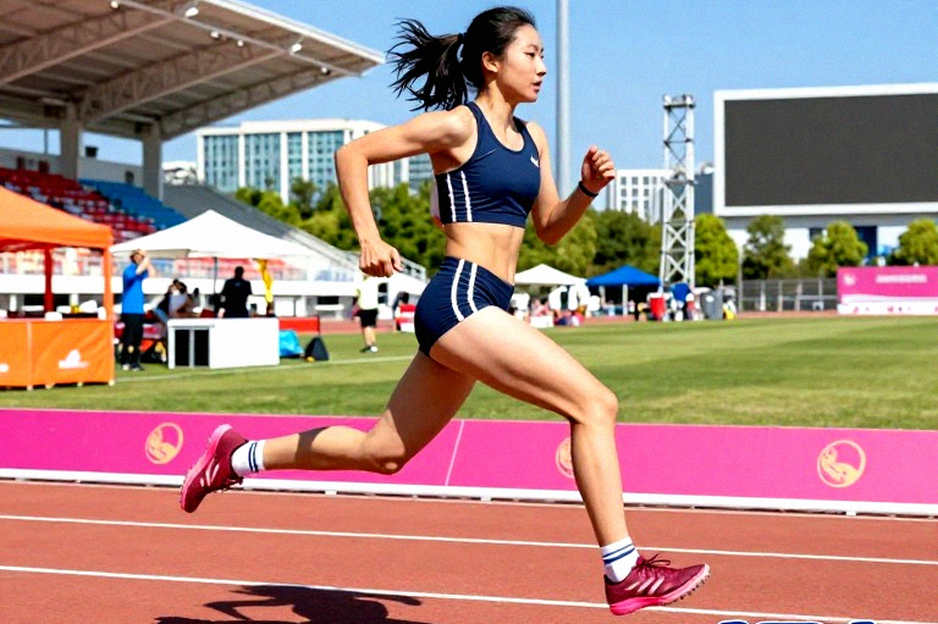
In Asia this is not unusual. Since 2026, China's 100 m has largely been one generation — Su Bingtian and Xie Zhenye. The paper record shows no obvious successor. Japan is the opposite: its sprint strength lives in collegiate and corporate-team pipelines, and it shows up most clearly in the relay. Thailand's strength is personal; Japan's is systemic. Personal strength can be erased by one hamstring; systemic strength cannot.
And Thailand's dependence on one athlete is documented inside the source itself — three events, 100 m, 200 m and the 4×100 m relay, with no second Thai sprinter named anywhere in five years of results. The 38.55 relay record exists; who runs the other three legs is not disclosed.
5. The 200 m, the junior list, and a category error
A claim has moved silently between events. The list is Bolt, then Knighton, then Boonson as the third-best teenager ever. The calculation belongs to the 200 m, where a 20.19 as a junior is a structural statement. Transferring it to the 100 m turns analysis into marketing.
Holding speed and creating speed are different training objects, and one athlete's acceleration profile does not transplant cleanly. A junior 20.19 implies an unusually complete speed-endurance profile and suggests his best long-term result may arrive first in the 200 m, where the maturation runway is longer. The caution is that not every track is equally fast. Venue, altitude, track stiffness and wind move a number by centimetres, and regional reporting — which the Vietnamese-language origin suggests this is — is reliable on regional detail but does not always carry venue adjustments.
6. Footwear: the missing deduction
In 2026 footwear is a first-order variable. Carbon plates and supercritical foams add centimetres on their own. No spike model is named in the source, so no equipment dividend can be subtracted from the 9.91. Two of the three columns are missing. A ledger with two blank expense lines does not contain a time; it contains a claim to a time. That is not an accusation against the athlete. It is a statement that the number has not yet entered the evidence room, and the proof required is a box, nothing more.
7. The regional milestone survives anyway
The sum has to be read the other way too. As an Asian Games record, the 9.91 may stall in the wind column. But beside the 9.94 from SEA Games 33 it carries different weight: the first Southeast Asian under ten seconds. That is regional history, and regional history is anchored more firmly than a wind reading. Here sits the commercially decisive number. A continental record is a headline; a first for an entire region is a market. Outside Asia, pickup will stay limited — in an electronically timed era, 9.91 is top-of-the-world-list conversation, not podium territory, which usually needs 9.80 to 9.85 in a championship final.
8. The comparative mirror: placing it beside Dhaka's ledger
Now the accounting that makes the piece complete. Anyone concluding that Asia's lower tier is simply failing should be shown a number, because structure is only legible next to structure.
The Bangladesh Athletics Federation's three-year grant ledger ran to roughly 1.1 crore taka, with administrative travel as the largest single line. Not one of the eight divisional headquarters has a synthetic track. That is the real backdrop against which 9.91 should be read. Thailand reached the neighbourhood of a continental record because at least one athlete received a decade of rhythm — a track, a coach, a competition calendar. Even the brightest number here is simultaneously an indictment: Thailand may be able to do it, while many of its neighbours are still counting, and for them a third round barely exists. Looking for the wind column, I found a second empty box — one labelled unequal access.
9. Verification before verdict
A semifinal win means a lane in the final, not a trophy. The source already called Boonson the gold-medal favourite before the final was run. That is a timing problem, not an opinion problem. The history of athletics says the fastest semifinalist frequently fails to convert; and when a federation's medal policy rests on one teenager, load management stops being the athlete's taste and becomes a structural decision. The file names no coach, no training base, no rehabilitation team. The rapid return from the 2026 injury, with a relay gold and a 38.55 national record, suggests a functioning support system — which makes the silence in the paperwork the real story. A report built on documents exists to pull those unwritten lines into the open, not to write hero arcs.
Contrarian Angle: What the Critics Miss
Nearly all coverage reads this in one direction — rising star, new generation, continental ascent. I read the reverse.
Asia's ceiling has not moved. Since 2026 the continental best has stayed at 9.83. The Asian Games record shifted by 0.01 seconds — that is not evolution, it is smoothing. Where eight years from 2026 to 2026 produce a hundredth of a second, the question before writing 'new king' is where those eight years went. Chinese and Japanese media will ask it, because neither country has produced a successor at 9.9x.
Second, the result does not prove Thailand's structure; it measures its risk. One athlete, three rounds, three events, no second name in the file. That resembles a family plan, not a national programme.

Third, the wind box is not a mere data gap. The rule is explicit: without it, the 9.91 is neither a result nor a record — it is a box in between. If the reading turns out to be +1.8, Thailand's pride does not shrink; the reporter's verification does.
Fourth, the framing follows the press convention of turning an athlete into a protagonist and making officials invisible. If Thai sprinting is to grow permanently, the questions concern federation budgets, tracks and calendars — not one teenager's finishing speed.
Takeaway: Where the Next Box Gets Filled
Here is what can be checked. The official wind reading and the official results file — until they exist, 9.91 cannot be used as a record. The same-evening final, which answers whether the fastest semifinal converts. The split sheets — a 0.158 second reaction time says the win came from closing speed, not the start. The 200 m and the relay — a hat-trick turns this into regional history; anything less leaves a semifinal story. And above all, how his body responds, given the 2026 injury file. Anyone genuinely keeping accounts is not watching the board. They are watching the right-hand column. Whatever number fills it is the actual result of these Asian Games — and if a headline is laid over it first, that will be a failure of journalism rather than a Thai triumph.